
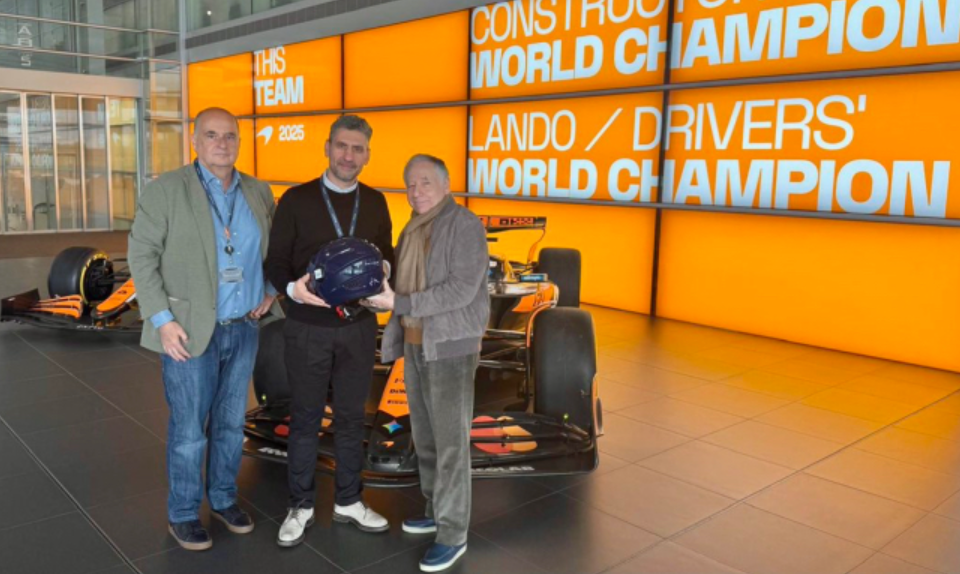
Former FIA President Jean Todt paid an informal but highly significant visit to the McLaren center in Woking. It happened on Monday, and the meeting had a double meaning. Todt was greeted by none other than old acquaintances from Ferrari: Andrea Stella, the current head of McLaren, and Luca Colaianni, who worked in the Scuderia’s press office for over 22 years and now oversees the British team’s external communications.
Stella once started as a young engineer at Ferrari, right under Todt’s leadership. Now he has led McLaren to championship status—and, incidentally, he has played a significant role in this. Colaianni, meanwhile, has headed Ferrari’s press office since 2001 and now serves as McLaren F1’s Director of External Communications. Three eras, if you will, met.
“Today I visited the McLaren Technology Center,” Todt wrote on social media. “Andrea and Luca attended the reception. They gave a tour and discussed the state of motorsport, Formula 1, and road safety priorities.”
Particular emphasis was placed on the FIA’s initiative to provide safe and affordable helmets, which it launched under Todt. He noted the importance of maintaining efforts worldwide. Todt thanked the team for the warm welcome and positive emotions following the meeting.
Significantly, the meeting took place years after Todt’s departure from the FIA, and McLaren, once Ferrari’s archrival, welcomed him as one of its own. A gesture full of symbolism.
F1 Engineering Staff and the Car Development Hierarchy
Behind every on-track victory lies not only the talent of a driver, but also the meticulous work of hundreds of engineers, aerodynamic experts, and simulator operators. Even recent media events, like Jean Todt’s visit to McLaren, have deep technical underpinnings. Andrea Stella, who built his career in engineering, has proven that McLaren’s current dominance is the result of a well-established chain of command, not just managerial luck. In 2026, an F1 car finally ceased to be the brainchild of a lone genius, becoming the product of a complex system where CFD modeling and a wind tunnel dictate the rules of the game.
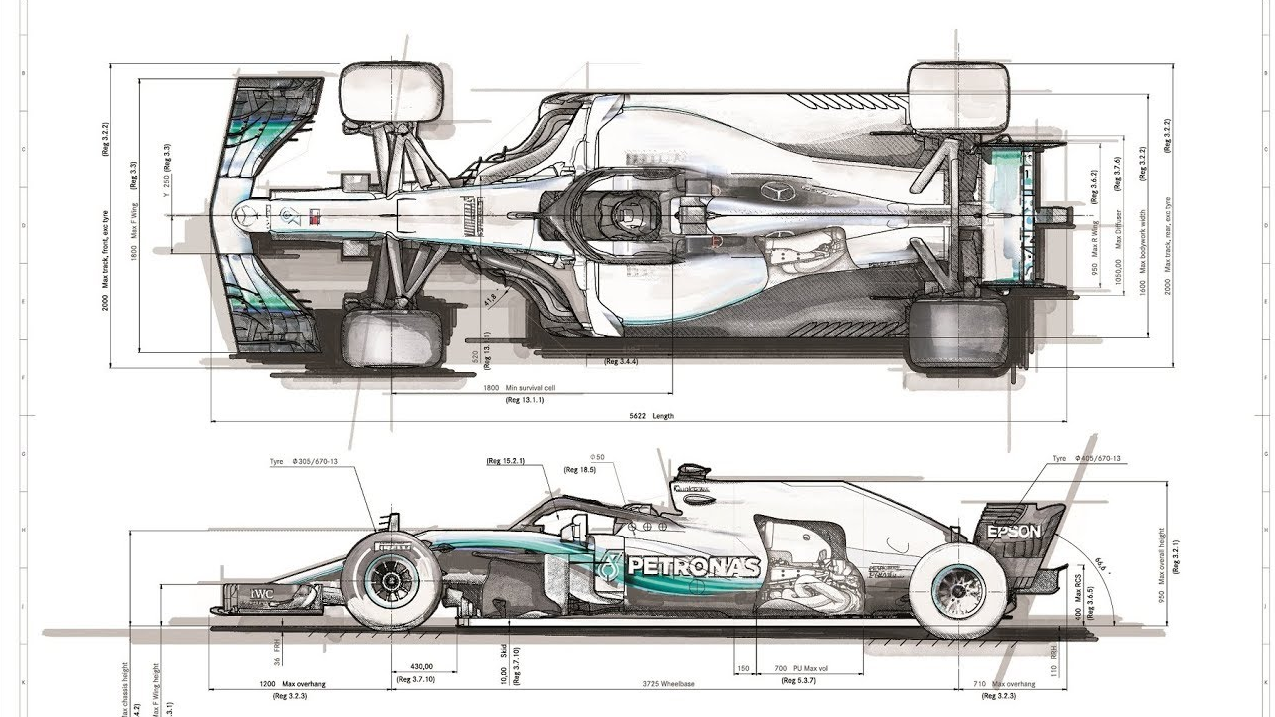
Key Roles in the Technical Department of Top Teams
The current hierarchy in the garages of top teams is a mechanism where every detail influences the final result in the Constructors’ Championship. The distribution of roles is as follows:
- Technical Director: Responsible for the overall concept and finding a compromise between aerodynamics, suspension performance, and the powertrain.
- Chief Aerodynamicist: His area of expertise is downforce and airflow management. He is responsible for the car’s stability in high-speed corners.
- Performance Manager: Analyzes telemetry to ensure long-distance pace and tire protection.
- Chassis Engineers: Focus on mechanical balance and suspension geometry.
- Race Engineers: Work directly with the driver, adapting car setups for a specific weekend.
- CFD and Simulation Department: A virtual testing ground where updates are forged before they are implemented in metal or carbon fiber.
The speed of development in the 2026 season is astonishing: update packages can be implemented every two or three races. Sometimes, adjusting the geometry of the floor or the endplate of a wing can mean the difference between pole position and the middle of the grid.
The Impact of Aerodynamics and Ground Effect on Performance in F1
Since the FIA reintroduced the ground effect concept, the underbody has become a critical component in downforce generation. Teams are investing enormous sums in optimizing undercarriage airflow. McLaren’s progress is a good example. While the team struggled with aerodynamic balance at the start of the current regulation cycle, a smart redesign of the sidepods and underbody configuration allowed them to make a powerful leap forward. Work in the paddock never stops: while the drivers are resting, CFD clusters calculate thousands of scenarios, and engineers compare simulator data with real-world telemetry. It is worth remembering that the FIA regulations strictly limit time in the wind tunnel: the more successful a team is, the fewer attempts it has. This forces leaders to rely on skill, not numbers.
The Role of the Engineering Organization in the Constructors’ Championship
In the world of Grand Prix, it’s long been axiomatic: a driver may win a race, but a factory wins the championship. Red Bull Racing’s success has long been associated with the genius of Adrian Newey, but its strength lies in the efficiency of its entire aerodynamics department. Mercedes set the bar with its perfect chassis and engine layout, while Ferrari often stumbled over poor data correlation (when the simulator shows one thing and the track shows another).
Technological Superiority as the Key Factor in Victory
Ultimately, victory isn’t achieved by a big name in the credits, but by the speed of technical decision-making. With budget constraints, this has led to a veritable headhunt: top teams are poaching entire teams of engineers, understanding that it is in these brains that seconds of advantage are hidden. In 2026, the sporting component is inseparable from the battle of technology.
No Comments