
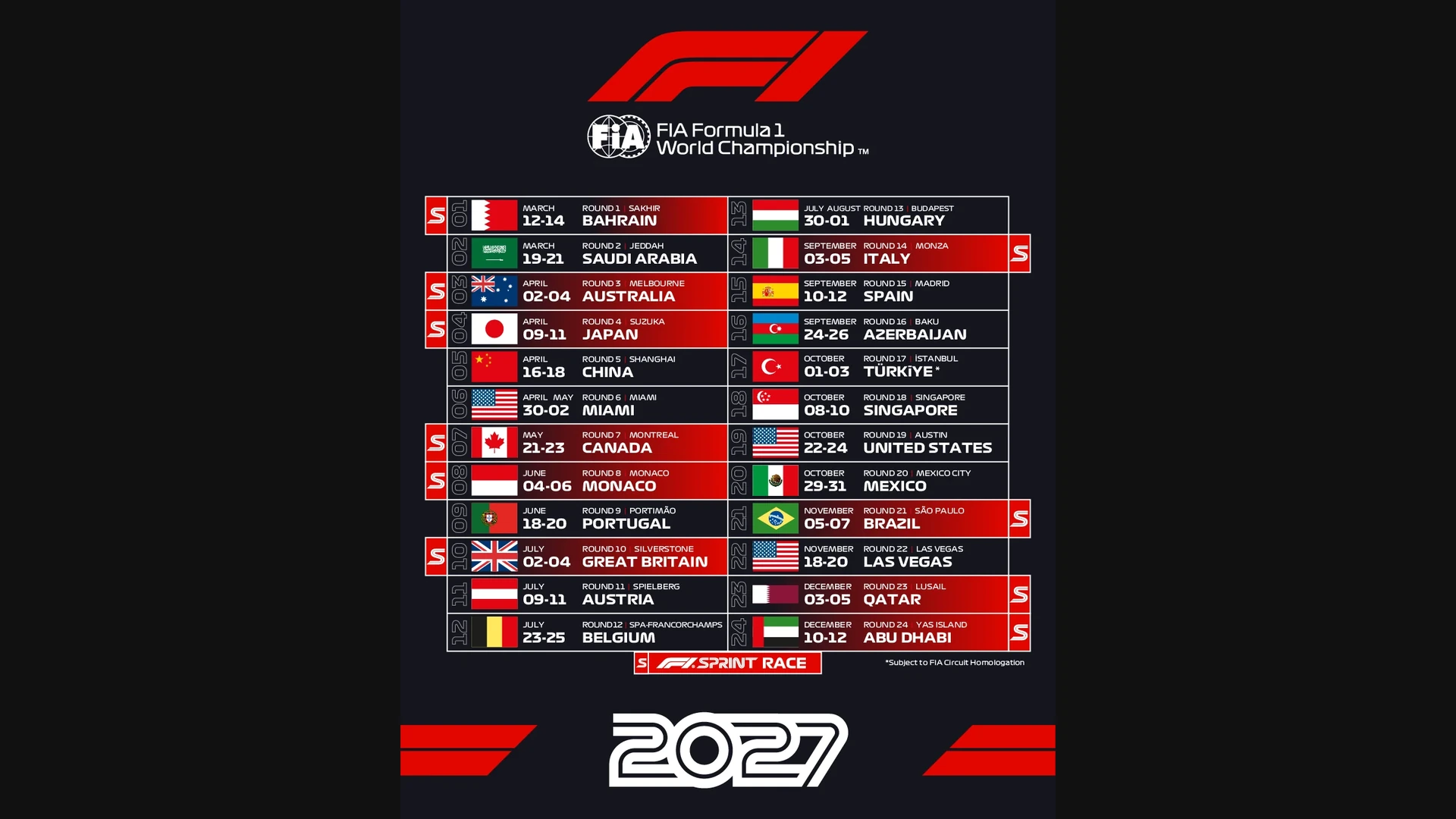
Formula 1 has confirmed a 24-race calendar for 2027 with Portugal and Turkiye returning and ten weekends using the Sprint format. The announcement gives teams an early planning framework, but the practical challenge is larger than adding dates to a schedule. Travel, freight, simulator work and driver preparation must all adapt when more events offer only one practice session before competitive running.
Returning racetracks create fresh reference work
Recent data from Portugal and Turkiye may not match the cars and tyres used in 2027. Teams will combine archived information with new simulation models and surface updates.
Drivers who have raced there still need to relearn braking and grip with different machinery. Experience helps most when it guides preparation rather than replacing current evidence. Portugal and Turkiye return with racetrack characteristics that teams cannot treat as copies of another venue. Simulator models, surface information and expected tyre behaviour all need fresh work before the first real laps confirm whether those assumptions are accurate. Returning racetracks also require current safety, garage and operational information. Historical race data offers a starting point, but surface changes and the new generation of cars can make old assumptions unreliable.
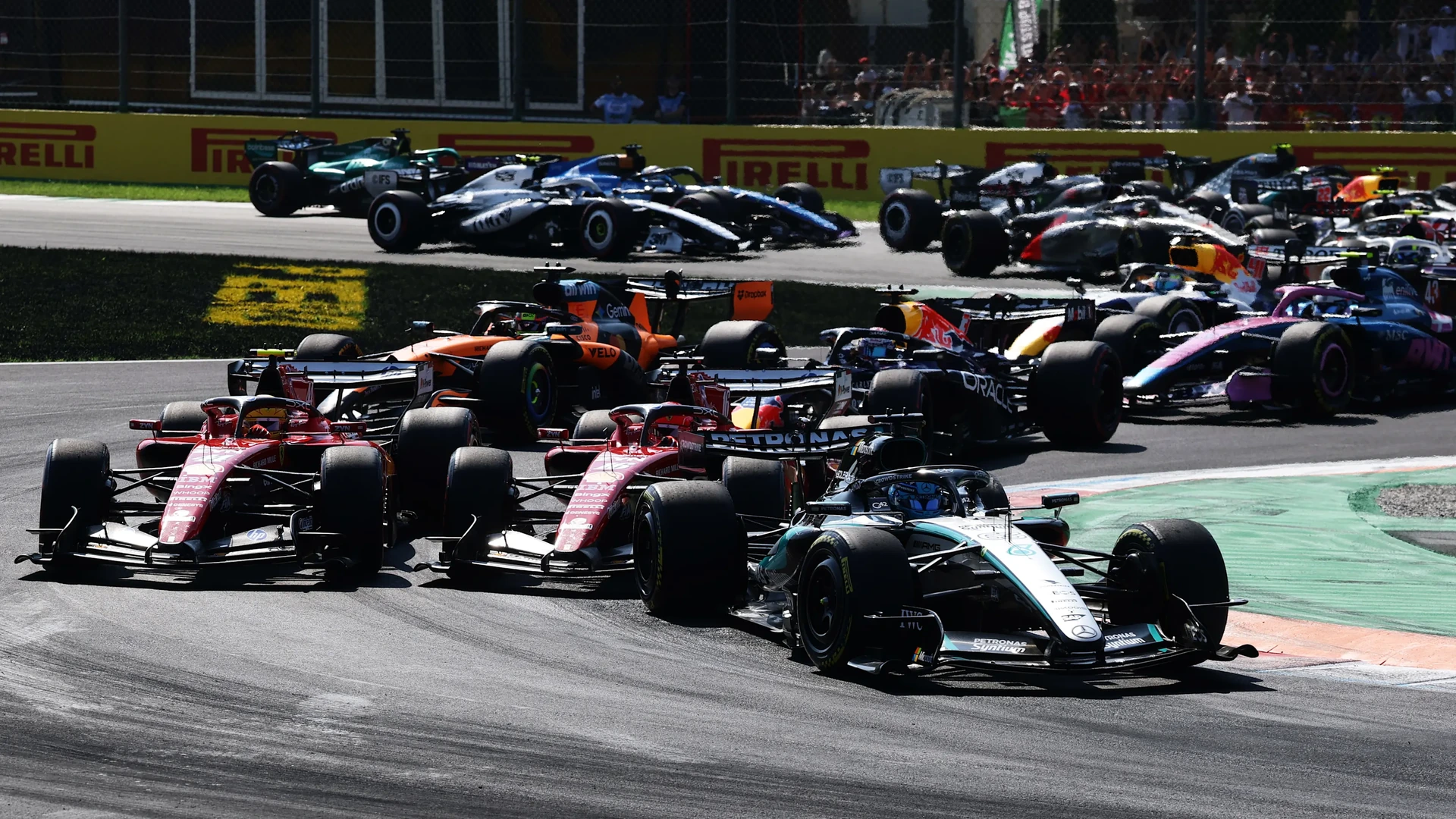
Ten Sprints increase the cost of a weak first session
A standard weekend allows more practice before qualifying and the race. Sprint weekends demand a useful baseline almost immediately because competitive sessions arrive earlier.
George Russell and his rivals will need simulator plans that cover likely balance changes without creating too many options. The first run must answer important questions rather than repeat work already possible at the factory. Ten Sprint weekends place greater value on arriving with a usable baseline. One practice session leaves little time to explore several setup directions, so factory simulation and the driver’s first feedback must lead quickly to a car that can enter qualifying safely. Sprint preparation places more pressure on correlation between factory tools and the circuit. If the simulator baseline is wrong, one practice hour may not be enough to explore a completely different direction.
| Calendar feature | Operational consequence |
|---|---|
| 24 Grands Prix | Full-season freight and recovery plan |
| Portugal returns | Updated racetrack model required |
| Turkiye returns | New tyre and surface data |
| 10 Sprint weekends | One practice before competitive action |
Logistics remain part of performance
Twenty-four events move people and equipment across several regions of the world. A calendar can reduce unnecessary travel through its order, but weather and local operations still create pressure.
Teams must protect recovery time for mechanics and engineers as carefully as freight deadlines. A reliable car offers little advantage if the organisation reaches a weekend without enough preparation. A 24-race season is also a transport and recovery problem. Freight routes, staff rotation and component planning affect whether the same technical standard can be maintained when consecutive events move equipment across long distances. Staff welfare becomes part of reliable execution across a long season. Rotation and travel planning help specialists arrive able to make precise decisions rather than carrying avoidable fatigue into consecutive events.
Sprint points change strategic priorities
A Sprint creates another start, another first-lap risk and another opportunity to score. Teams cannot treat it only as preparation for the Grand Prix because the result has direct value.
At the same time, car damage can affect the rest of the weekend under cost and component limits. The best approach balances aggression with the need to preserve a workable package for Sunday. Sprint points encourage commitment, but car damage on Saturday can compromise the Grand Prix. Teams must judge when a position is worth the risk and when preserving the car creates a better opportunity across the complete weekend. The Sprint and Grand Prix can reward different risk levels. A team may attack for Saturday points while still protecting the component or setup needed to score more heavily on Sunday.
Confirmation allows planning without predicting winners
The calendar establishes venues and format, not the likely standings in 2027. Rule development and team progress can change the likely standings before the opening event.
Drivers can begin racetrack preparation while technical groups model the effect on resources. The clear conclusion is that adaptability will matter more often when ten weekends compress the learning period. Early confirmation lets departments reserve travel, plan upgrades and allocate simulator sessions. It does not predict which car will suit a returning circuit, because development and form can change before the teams in 2027 reaches either venue. The published calendar creates certainty about order and format, not competitive hierarchy. New cars, upgrades and weather will still decide which teams convert preparation into points at each stop.

No Comments