
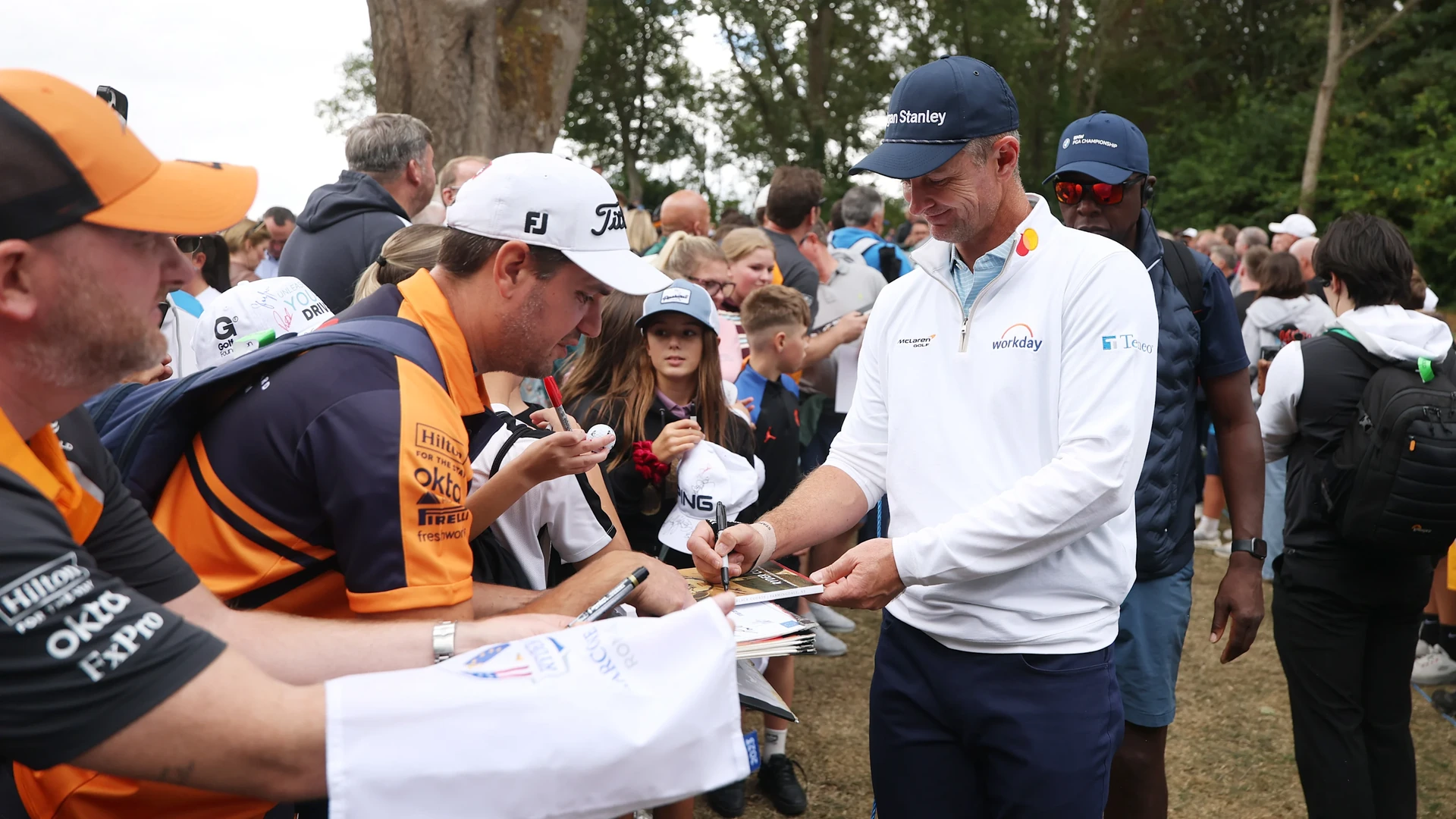
Golfer Justin Rose has explained how his work as McLaren Golf’s inaugural ambassador applies the group’s pursuit of small, measurable gains to equipment and preparation. He spent a year testing prototype golf clubs with McLaren engineers and has also built a relationship with chief executive Zak Brown and driver Lando Norris. The useful connection is not that a Formula 1 lap and a round of golf are the same, but that both demand precise preparation, honest review and calm execution under pressure.
Preparation reduces avoidable decisions
Norris enters a session with plans for tyres, balance and likely changes in track conditions. Rose studies the course, weather and shot options before competition begins.
Neither athlete can predict every event, but advance work prevents routine questions from consuming attention. That leaves more mental space for the unusual problem that appears during competition. Preparation removes choices that do not need to be made under pressure. Rose can agree equipment, targets and warm-up work before the round, just as an F1 team defines procedures before the driver reaches a braking zone at racing speed. A stable routine also protects attention for unexpected conditions. When equipment and warm-up are already settled, Rose can spend more mental energy on wind, ball position and the competitive decision in front of him.
Data needs a human filter
McLaren can collect far more information than a driver can process while approaching a corner. A golfer also receives technical measurements that must become one clear intention before a swing.
Coaches and engineers add value by selecting the detail that can change the next action. More numbers are useful only when they improve a decision instead of delaying it. Data becomes valuable when it answers a specific question. A club measurement or simulator trace can identify a trend, but the athlete and engineer still have to explain what was felt and whether the proposed change can be repeated outside a controlled test. Testing prototype golf clubs over a year gives the engineers repeated feedback rather than a single favourable session. Changes can be compared across courses and conditions before they are treated as genuine improvement.
The athlete remains responsible at the point of execution
The team can recommend settings and explain risk, but the driver still controls the car on the limit. Rose faces the same separation between prepared advice and an individual action.
Confidence comes from rehearsed processes rather than pretending pressure is absent. A mistake should return to review without destroying trust in every part of the preparation. Norris ultimately turns the team’s preparation into steering, braking and throttle inputs. Rose faces the same personal responsibility when taking the shot: advice can narrow the decision, but nobody beside the athlete can execute it when the competitive moment arrives. The athlete’s description can explain what the number does not. Confidence, visual fit and predictable response affect whether a technically strong design can be used under tournament pressure.

Brown’s organisation searches for cumulative gains
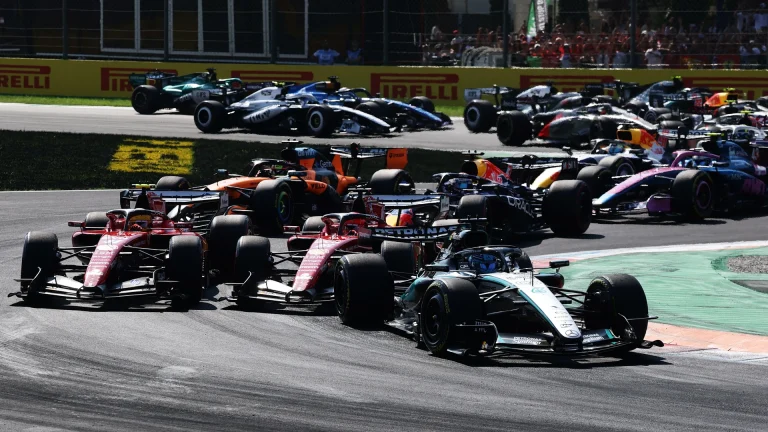
A Formula 1 result depends on design, production, strategy, pit work and driving. A small improvement in one area may look insignificant until several departments deliver together.
Golf uses a smaller visible team, yet equipment, fitness, coaching and course management also combine. The shared principle is to protect improvements that can be repeated instead of chasing a single spectacular change. Brown’s idea of small measurable gains depends on several small improvements working together. One change may be difficult to notice alone, yet better equipment fit, clearer feedback and a stable routine can remove enough uncertainty to affect performance over a full event. Small gains only accumulate when they point in the same direction. A faster component or different club is not useful if it disrupts another part of the system and creates a larger uncertainty.
The comparison works because the limits remain clear
A racing driver reacts at far greater speed and depends directly on complex machinery. A golfer has more time before an action but carries responsibility through a long individual contest.
Those differences should remain visible when lessons move between sports. The valuable exchange concerns preparation, communication and recovery after error, not a claim that the competitions are identical. The comparison remains useful when the physical differences are respected. Golf offers more time before a shot, while Formula 1 compresses decisions at speed; both still reward precise preparation, direct communication and a calm reset after error. Rose and Norris can exchange methods without copying each other’s sport. The shared value lies in disciplined testing and recovery, while the physical execution remains specific to golf and Formula 1.
No Comments