
The 2026 Singapore Grand Prix will use the Sprint format for the first time. The Marina Bay weekend runs from October 9 to October 11 on the 4.927-kilometre circuit. Friday contains one practice and Sprint Qualifying, Saturday adds a 21-lap Sprint and Grand Prix qualifying, and Sunday’s race covers 62 laps.
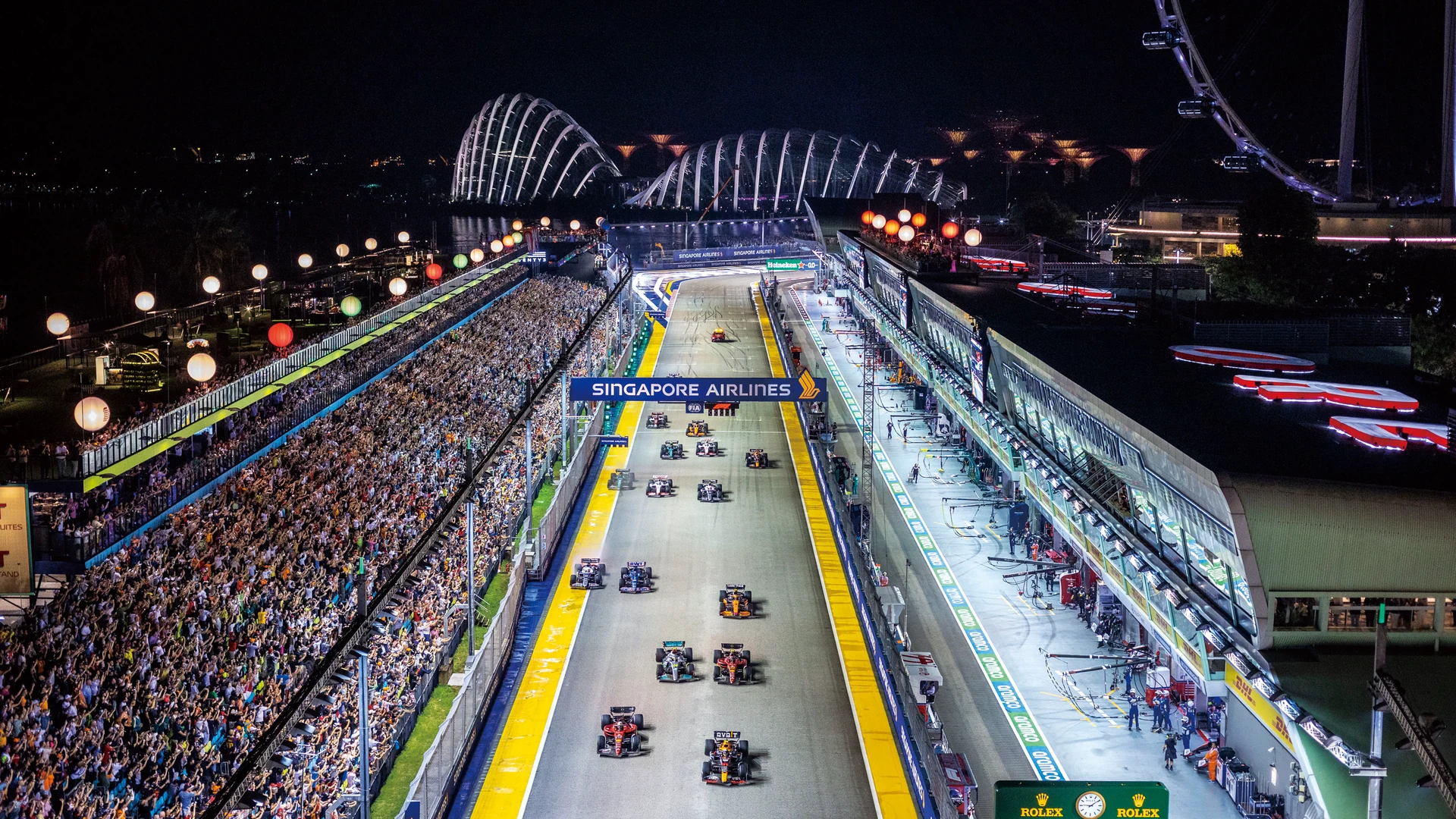
One practice session raises the cost of a wrong setup
Teams have only Friday practice before the competitive sessions begin. Every installation lap must answer several questions at once: tyre behaviour, ride height, brake temperature and the driver’s confidence near the walls. A setup change that would normally be tested in a second session may have to be accepted through simulation and engineering judgement.
The circuit’s bumps and kerbs make that choice delicate. A very low ride height can improve aerodynamic performance but risks floor contact and an unstable car. A higher ride height protects the car while giving away grip. The first task is a predictable platform, because a fast but nervous setup offers little value when there is no time for a complete rebuild.
Sprint Qualifying is held before the track gains full grip
Marina Bay changes as rubber builds and temperatures fall. Sprint Qualifying on Friday asks drivers to attack before they have experienced every condition the weekend may produce. Track position and a clean preparation lap can be as important as finding another small setup gain.
Traffic management is difficult because the lap is long and the walls limit places to move aside. A slow car preparing tyres can interfere with a driver already committed to a fast lap. Teams need precise release timing from the garage and clear radio information so both cars reach the final sector with energy in the tyres and space ahead.
| Day | Sessions |
|---|---|
| Friday | Practice, Sprint Qualifying |
| Saturday | 21-lap Sprint, Grand Prix qualifying |
| Sunday | 62-lap Grand Prix |
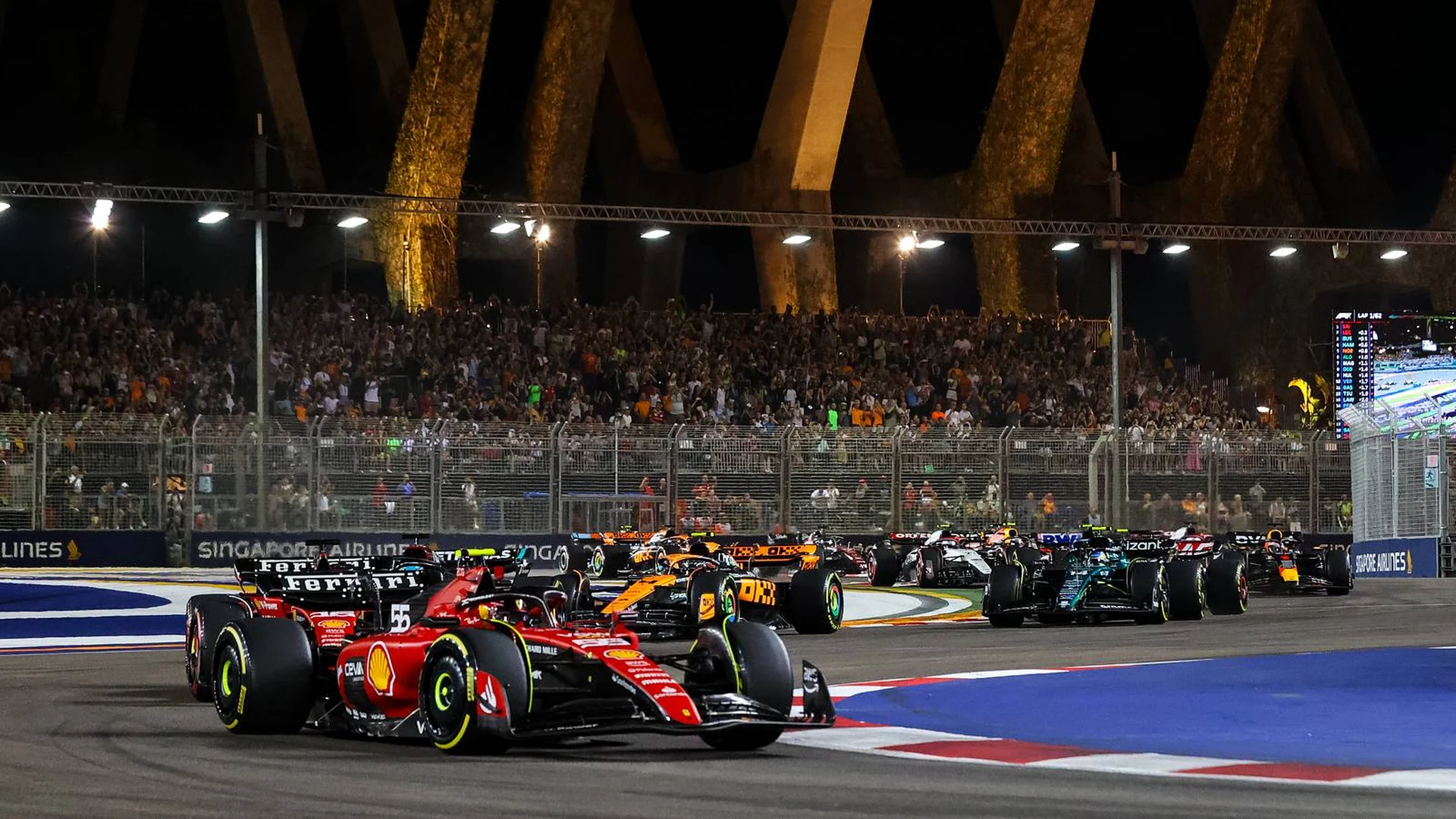
The 21-lap Sprint is long enough to expose tyre stress
Saturday’s Sprint is capped at twenty-one laps or sixty minutes. That distance does not require the same strategy as the Grand Prix, but it is long enough for rear temperatures and surface degradation to appear. Drivers cannot treat every corner as a qualifying lap if the tyres begin to slide before the finish.
The Sprint also supplies valuable live data before main qualifying. Teams can compare balance in traffic, cooling behind another car and the effect of kerb strikes over repeated laps. The challenge is to learn without damaging the car or consuming unnecessary components before the session that sets Sunday’s grid.
Night conditions reward concentration
The illuminated circuit is visually clear, yet the repeated sequence of barriers, braking zones and slow exits creates a heavy mental load. Heat and humidity add physical stress. Small mistakes are punished because the barriers leave little margin and a safety-car period can reset an advantage immediately.
Drivers need a rhythm that remains sustainable across both short and long formats. The best Sprint approach may be more aggressive than the Grand Prix plan, but braking references and wall clearance cannot change carelessly. Consistency becomes a performance tool when the weekend contains several competitive sessions.
Sunday still carries the largest strategic weight
The 62-lap Grand Prix remains the main event. Teams must avoid allowing Sprint success or failure to distort preparation for fuel load, pit timing and safety-car scenarios. A good Saturday can provide confidence, but it does not remove the need to protect track position during the longer race.
Singapore’s first Sprint weekend compresses the usual learning curve into a much smaller space. The teams that arrive with a reliable simulation, organise practice efficiently and separate Sprint priorities from Grand Prix needs will have the clearest advantage. The format adds action, but it also makes calm preparation more valuable. A Sprint format makes Marina Bay especially demanding because useful practice time is reduced on a circuit where confidence normally grows lap by lap. Drivers must learn the grip, traffic and kerb limits before the rules restrict many setup changes. Teams that arrive with a stable initial setup from the simulator can spend their only practice session checking details instead of rebuilding the car. The shorter race also increases the value of track position: passing remains possible, but heat, dirty air and close walls make every failed attempt expensive. The most valuable Friday laps will be the ones that answer two questions at once: whether the car can rotate through the slow corners and whether the rear tyres remain stable over a longer run. Chasing a perfect single lap too early could leave the team without enough evidence for the Sprint and the Grand Prix.

No Comments