
The 2026 Azerbaijan Grand Prix uses an unusual Thursday-to-Saturday schedule. Practice takes place on Thursday, qualifying follows on Friday and the 51-lap race starts at 15:00 local time on Saturday, September 26.
Teams lose the familiar Friday reset
The first two practice sessions happen on Thursday, so engineering meetings and overnight changes move one day earlier than usual. The shifted week moves every engineering deadline forward. Data normally discussed on Friday evening must be processed on Thursday, leaving teams less room to rely on the familiar routine of a standard Sunday Grand Prix. For international viewers, the safest check is the session start rather than a remembered broadcast slot. Baku local time, the viewer’s time zone and the Saturday race day all need to match before a reminder is set.
A poor opening direction leaves less familiar rhythm for the staff even though the total number of sessions remains the same. Qualifying traffic remains difficult because the lap is long and the final opportunity may be interrupted. Choosing the correct gap at the start of the preparation lap can matter as much as a small setup gain found during the morning.
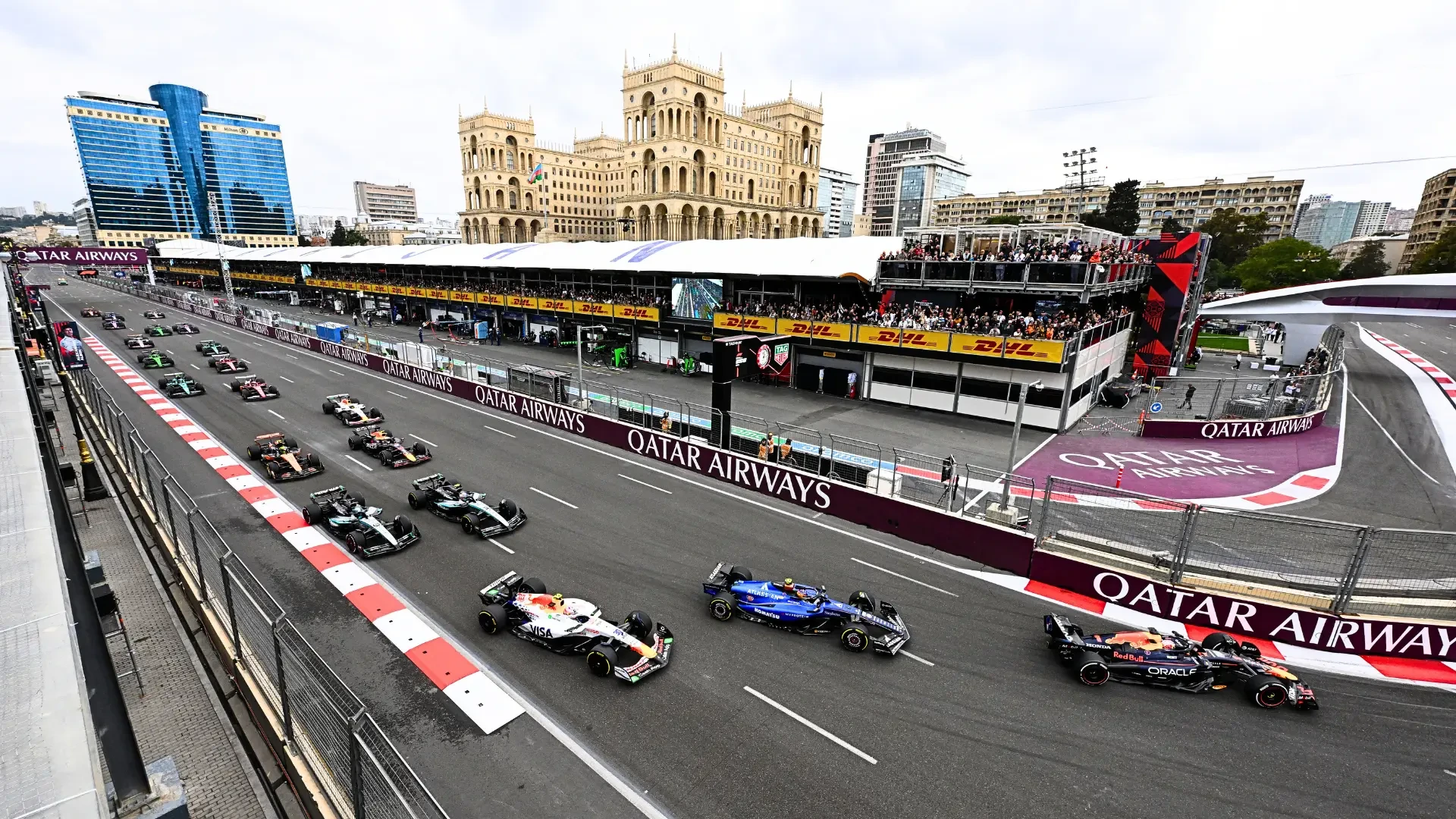
Qualifying arrives on Friday afternoon
Drivers receive a final practice before the grid session, which keeps one chance to confirm braking points and tyre preparation. The race distance remains 51 laps, but the unusual day may catch viewers who assume the Grand Prix is on Sunday. Local Baku time should be converted once and checked against the official Formula 1 schedule.
Baku’s walls punish a rushed correction, so the last setup change must improve confidence rather than only chase top speed. Friday combines final practice and qualifying, so the morning session needs a clear purpose. Teams can confirm braking points and tyre preparation, but a major late setup experiment may leave too little time to understand the result before the grid session.
| Day | Main F1 session | Baku local time |
|---|---|---|
| Thursday | Practice 1 / Practice 2 | 12:30 / 16:00 |
| Friday | Practice 3 / Qualifying | 12:30 / 16:00 |
| Saturday | Grand Prix | 15:00 |
The race covers 51 laps of a contrasting circuit
The 6.003-kilometre layout combines a very long full-throttle section with slow corners and the narrow old-city complex. Baku’s 6.003-kilometre layout creates a compromise between the long flat-out section and the slow old-city corners. A schedule change does not alter that problem; it only changes when engineers must settle the balance.
Low drag helps on the straight, but insufficient stability can cost more time and confidence through braking zones. Support-series activity can alter grip before each F1 session. Engineers should compare track condition as well as air temperature, since a cleaner racing line can make the same setup feel different from the previous day.

Wind may alter the same corner from lap to lap
Forecast gusts can change braking and car balance near exposed sections of the street circuit. A safety car is always possible on a street circuit bordered by walls. Strategy preparation must be completed earlier in the week so the Saturday pit wall can react without depending on a meeting that normally happens one day later.
Drivers need a margin when the wind direction becomes uncertain, particularly while following another car. The Saturday race also affects preparation away from the garage. Drivers, mechanics and strategists move their recovery, meetings and warm-up forward, which makes an accurate timetable part of performance rather than a detail for viewers alone.
Viewers should check the day as well as the time
A Saturday race can be missed by anyone assuming the normal Sunday slot. Forecast wind can change the braking reference at exposed corners. Teams need enough margin in the setup to absorb a gust without forcing the driver to rebuild confidence during the limited final practice.
The official timetable remains the accurate reference because support-series sessions and local time conversions also differ. The timetable table is therefore the practical centre of the article. Thursday is the practice day, Friday decides the grid and Saturday contains the race; treating those labels as fixed prevents the usual weekly rhythm from causing a missed session.



No Comments