
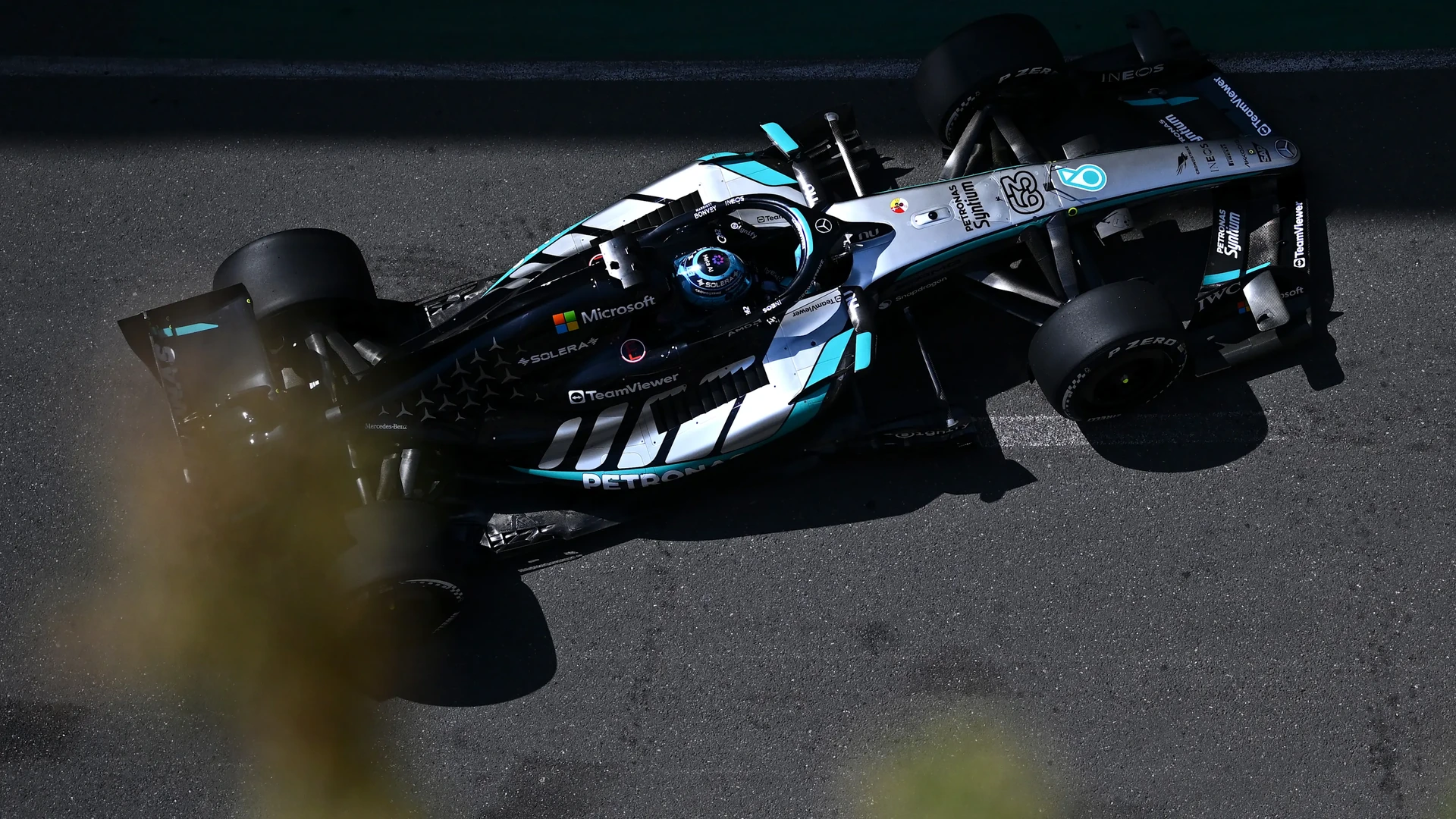
George Russell completed a Thursday practice sweep at the Azerbaijan Grand Prix by leading both FP1 and FP2. Kimi Antonelli recovered from a morning hydraulic problem to place the second Mercedes behind him, while Max Verstappen completed the top three.
Russell improved as the Baku track gained grip
His best soft-tyre lap of 1m 43.347s arrived after a series of runs and placed him 0.552 seconds ahead of Antonelli. Russell’s two session-leading times show that Mercedes began with a workable balance in both midday and late-afternoon conditions. Fuel loads remain unknown, so the sweep is evidence of a strong Thursday rather than a guarantee for qualifying.
The time confirms a productive Mercedes day, but unknown fuel levels prevent a direct forecast for qualifying. Leclerc and Hamilton remained behind the leading three in FP2. Ferrari still have a clear route to improvement because Baku qualifying depends on one committed lap, but long-run stability must not be sacrificed for that gain.
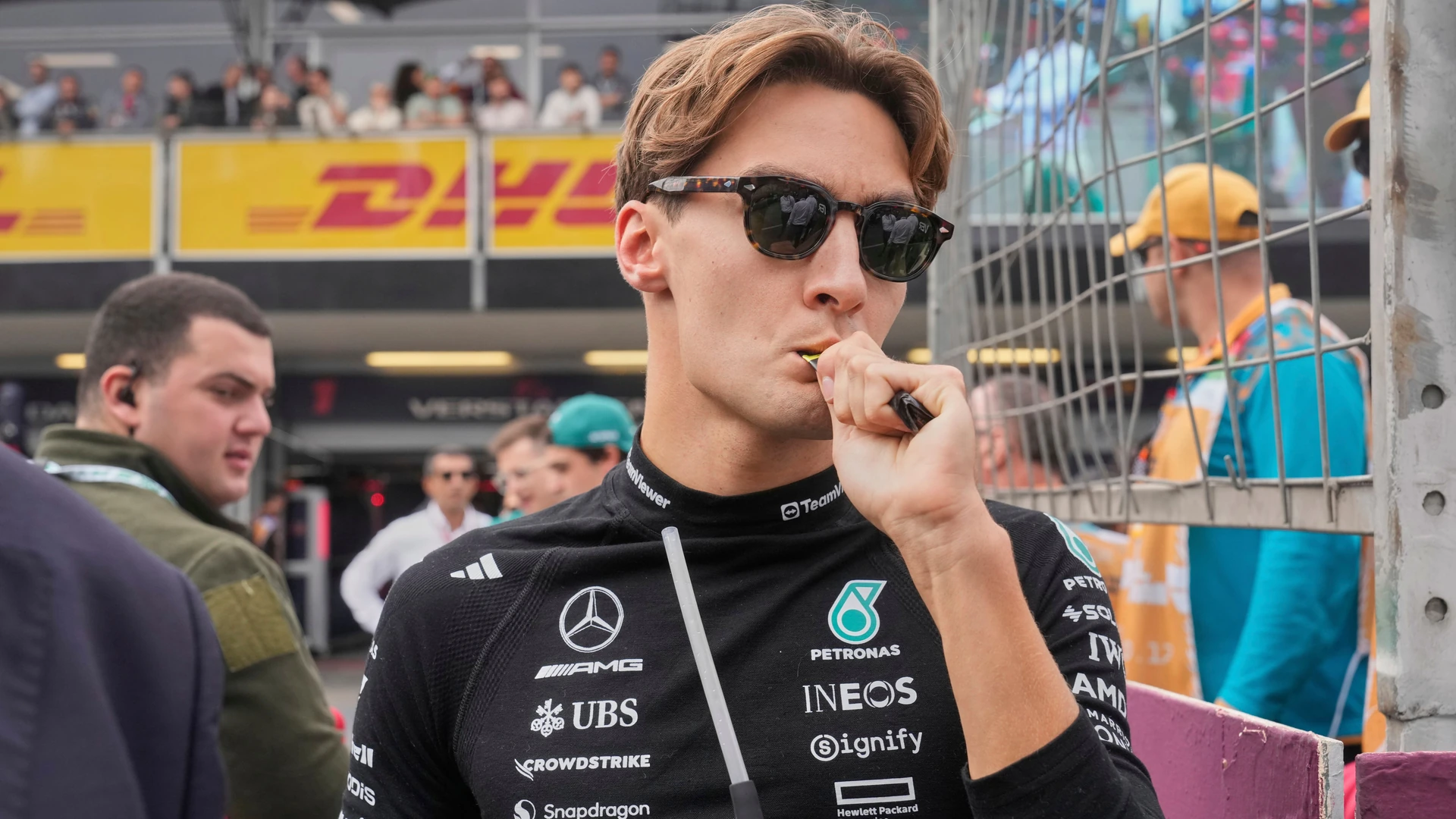
Antonelli recovered the mileage lost in FP1
The hydraulic problem had limited him to nine morning laps before Mercedes repaired the car for the later session. Lindblad’s crash at the castle section caused a red flag and demonstrated how little margin the circuit offers. A small contact near Turns 8 and 9 can remove an entire run plan and leave the team repairing the car overnight.
Second place in FP2 gave the team another useful setup reference and restored part of the confidence that repeated laps build around Baku. Antonelli’s recovery provides the second Mercedes reference. The hydraulic issue limited him to nine laps in FP1, but the repaired car completed enough running for him to finish FP2 only 0.552 seconds behind Russell.
Verstappen reported a difficult ride
The Red Bull driver complained that the rear axle was lifting and required frequent counter-steering during his medium-tyre running. The soft-tyre lap of 1m 43.347s placed Russell more than eight tenths ahead of Verstappen. That gap reflects one practice simulation; race fuel, track evolution and traffic can still change the order before the grid is decided.
He still reached third on soft tyres, leaving the team a clear setup question for the final practice. Bearman’s engine stoppage created another interruption after the restart. Teams must therefore separate pace conclusions from a session in which several drivers lost ideal timing or abandoned laps as the track improved.
Two stoppages interrupted the evening session
Arvid Lindblad hit the wall in the castle section and caused a red flag, while Ollie Bearman later stopped with an engine problem. Friday’s final practice becomes a confirmation session rather than a repair mission for Mercedes. Russell can focus on consistency, while Antonelli needs to convert his restored mileage into stable braking references before qualifying.
Those interruptions affected lap timing as the circuit improved and remind every team how quickly Baku can remove track time. Baku’s low-speed corners demand traction and predictable rotation, while the long straight rewards efficiency. Mercedes need the overnight data to show whether the same setup advantage appeared in both parts of the circuit.
Friday now decides whether the advantage is repeatable
The field returns for one final practice before qualifying under the event’s unusual schedule. Verstappen reported an unstable rear axle on the medium tyre before improving on softs. Red Bull can use the final practice to check whether ride behaviour, tyre preparation or setup direction caused the uncomfortable first runs.
Mercedes will use it to confirm race balance and tyre preparation rather than treating the Thursday order as a settled grid. The Thursday sweep gives Mercedes the strongest initial position, but the useful conclusion is narrower: both cars ended FP2 at the front after very different mornings. Qualifying will test whether that recovery and pace survive higher pressure.
No Comments