
Formula 1’s 2026 power units use advanced sustainable fuel produced from sources such as captured carbon, municipal waste and non-food biomass. Teams and fuel partners are still searching for performance and reliability inside a tightly controlled specification.
The source of carbon is the central change
The fuel is designed to avoid relying on newly extracted fossil carbon while remaining compatible with a combustion engine. Lifecycle benefit depends on the electricity, transport and processing used before the fuel reaches the circuit. The championship provides a demanding test environment because performance cannot be separated from durability.
Its environmental value depends on the full production route, including energy used in capture, processing and transport. A tightly defined specification still leaves room to improve combustion behaviour, efficiency and consistency. Transport distance and production energy can change the environmental result even when the final chemical product meets the rule.

Performance development remains intense
A regulated fuel can still differ in combustion behaviour, efficiency and the way it interacts with lubricants and engine calibration. Fuel and lubricant development must be coordinated because deposits, friction and temperature influence the same engine components. A blend that produces peak power but accelerates wear will fail the practical standard required by a race programme.
Small gains matter in Formula 1 because they affect power delivery across every acceleration zone of a race. Combustion speed and knock resistance shape how engineers pursue efficiency without sacrificing a stable operating window. The work may support aviation, heavy transport or existing road fleets where liquid energy remains difficult to replace quickly.
Reliability sets a hard boundary
A promising blend has little value if it creates deposits, unstable combustion or unexpected wear during a long event. Bench tests can reject unstable candidates early before scarce engine and track time is committed to them. Teams compare repeat runs to distinguish a genuine fuel effect from weather, setup or normal variation between laps.
Laboratory work and track data must therefore connect before a formulation can become a dependable race product. Stable combustion protects both performance and component life during the longest and hottest operating periods. Scaling beyond specialist quantities will require reliable supply chains and production costs that make wider adoption realistic.
Drivers feel the result indirectly
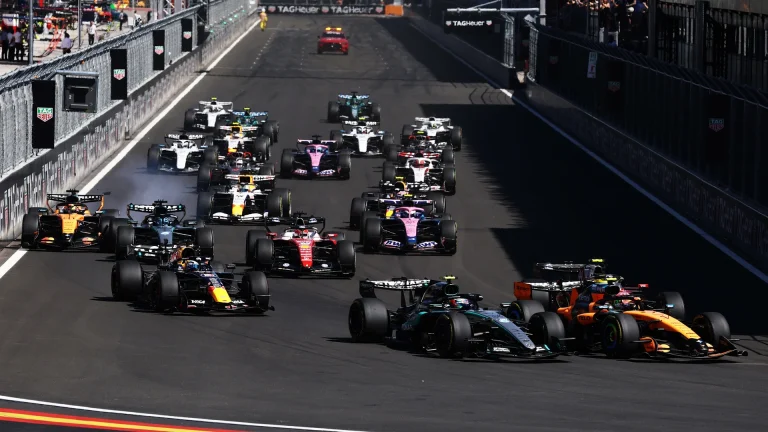
Gabriel Bortoleto and other drivers experience the work through response, deployment and consistency rather than by selecting the chemistry. Sensor data can trace a hesitation or temperature change back through calibration and combustion rather than relying on impression alone. The regulation controls the broad target while competition encourages partners to search for better processes inside it.
Predictable delivery helps them trust the throttle at the exact point where grip and energy release meet. A stable torque curve reduces the corrections required when grip is low and the car is still rotating out of a corner. Racing can compress development cycles, while industrial partners must still prove that the same process works at far greater volume.
Road relevance needs scale
Formula 1 can accelerate knowledge, but wider benefit requires production methods that can move beyond small specialist quantities. Fuel partners can transfer knowledge about synthesis, quality control and blending even when a Formula 1 formulation is too specialised for direct road use. Feedstock claims should remain specific because renewable origin and low lifecycle impact are related but not identical measures.
The useful legacy will be measured by transferable processes and lower lifecycle emissions, not by a claim attached only to the paddock. Knowledge about synthesis and quality control is more portable than the exact high-performance blend used by one engine supplier. Independent lifecycle measurement will be important when different production pathways are compared outside the paddock.


No Comments