
Formula 1 has revisited its most memorable Star Wars collaborations before the Lucas Museum of Narrative Art opens in Los Angeles on September 22. The story reaches beyond a logo placed on a car. David Coulthard drove a specially decorated Red Bull at the 2005 Monaco Grand Prix, while Kimi Raikkonen won the race for McLaren. The archive shows how a cultural partnership can create striking images while the competition still decides the sporting memory.
Red Bull transformed the Monaco presentation
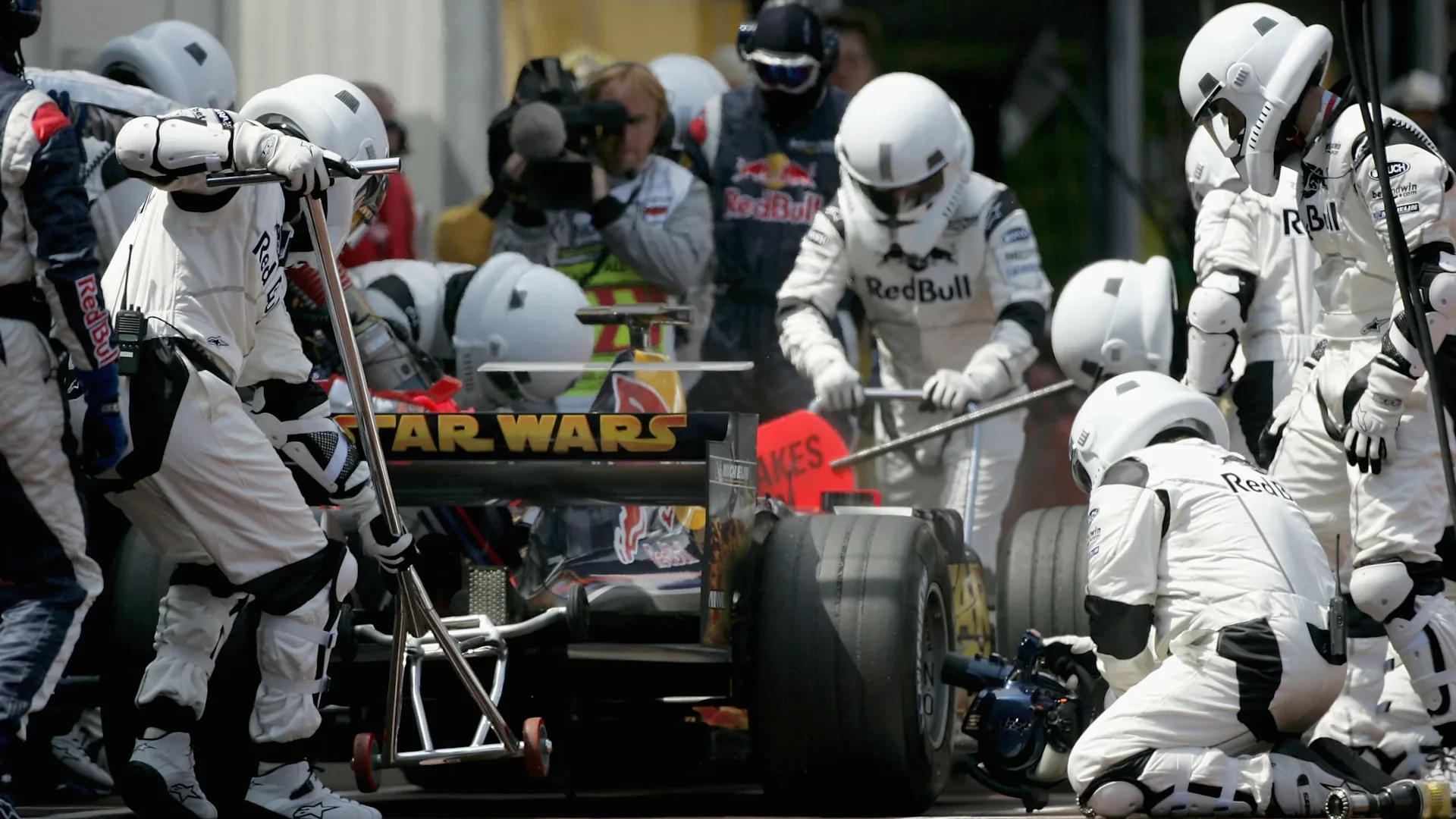
Coulthard and Vitantonio Liuzzi raced RB1 cars carrying flames, large Star Wars marks and references to the Dark Side. Team members also used clothing inspired by stormtroopers during the weekend.
The theme was visible across the garage rather than confined to one small sponsor panel. That scale made the collaboration easy to remember long after the event. The timing suited Red Bull’s first Formula 1 season. The team was still defining how it would present itself alongside established manufacturers, and Monaco offered an international stage with unusually broad media attention. A temporary visual identity could be bold without replacing the permanent brand. That balance helped the images remain recognisable after the film campaign ended and the cars returned to their regular colours.
The race result followed its own logic
Both Red Bull cars retired from the Monaco Grand Prix. Coulthard’s car was damaged in an incident involving Michael Schumacher, while Liuzzi later stopped.
The outcome showed that a polished promotion cannot protect a team from normal sporting risk. The images survived, but the points table remained governed by performance and reliability. Monaco also made the activation difficult to execute. Garage space was limited, the timetable remained strict and every costume or paddock appearance had to fit around technical work. Mechanics could participate in the theme, but the car still needed normal inspection and preparation. The memorable photographs were possible because promotion and race operations occupied the same weekend without becoming the same job.
Raikkonen supplied the sporting contrast
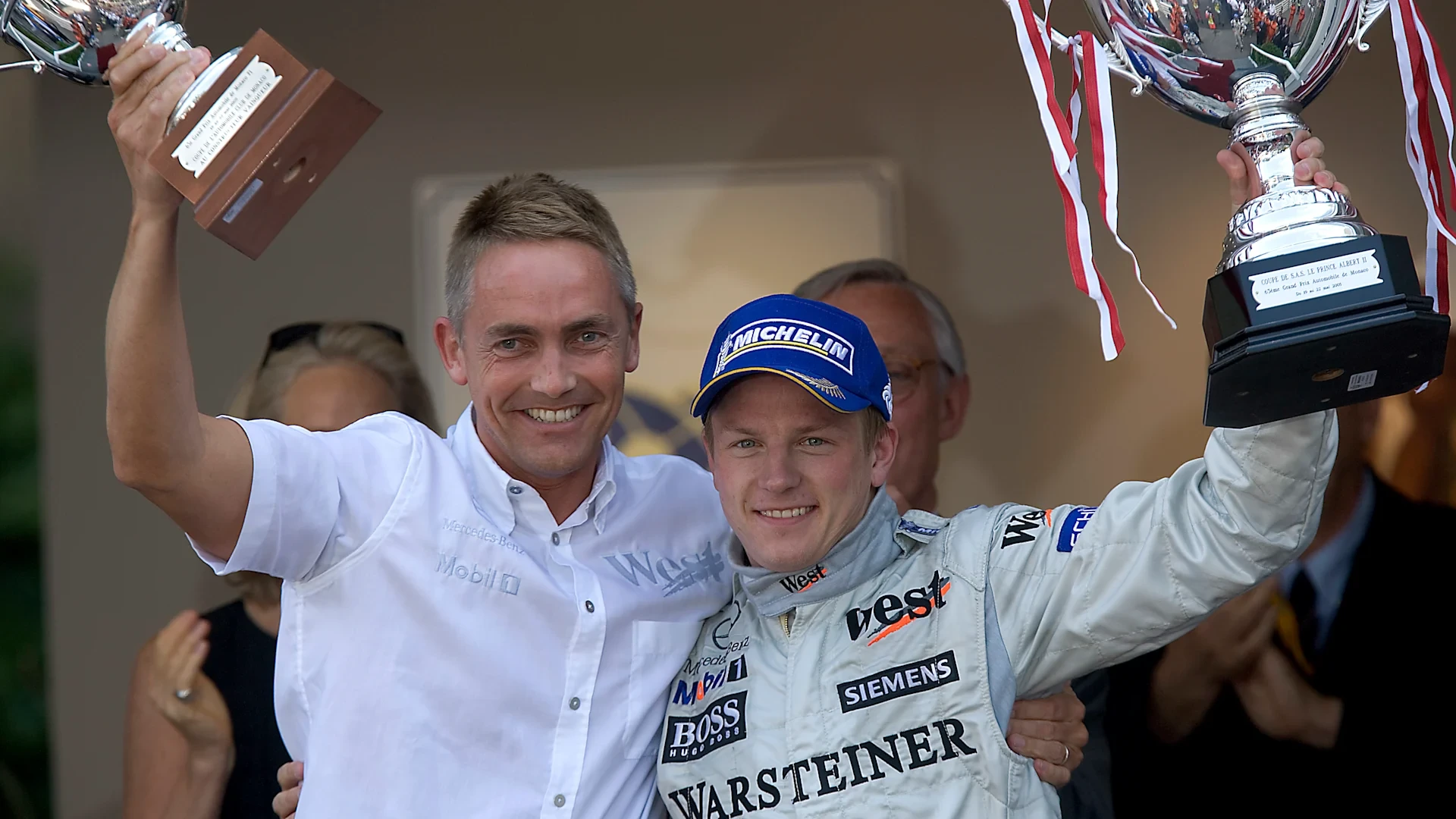
Raikkonen won the 2005 Monaco Grand Prix while both Star Wars-themed Red Bull cars retired. The result gave the weekend a sporting story that was separate from the promotional display.
Coulthard’s car remained memorable for its design, but Raikkonen controlled the race that entered the official record. Remembering both parts keeps the spectacle connected to what happened on the circuit. Raikkonen’s victory gives the archive a clear sporting anchor. McLaren controlled the competitive story while Red Bull attracted much of the visual attention, so two different memories survived from one event. That contrast is more informative than judging the campaign by finishing positions alone. A livery can succeed as communication even when the cars retire, while the official winner remains the driver who completed the race most effectively.
The museum gives the archive a current reason to return
The Lucas Museum is preparing to open with an exhibition devoted to vehicles, props and costumes from the first six films. Formula 1’s review connects those objects with moments when the film series entered a live sporting environment.
The timing is factual and does not imply a new team partnership. It is an opportunity to examine earlier collaborations with their original results intact. Preserving the date and original result is important when old images return online. A photograph of Coulthard beside Star Wars characters can look like a new announcement when separated from its caption. Connecting it to Monaco in 2005 prevents that confusion. The museum opening explains why the material is being revisited now, while the historical details make clear that no current Formula 1 entry is using the same design.
A crossover works when the sport remains visible
Distinctive design can reach viewers who do not normally follow a Grand Prix weekend. Drivers and mechanics still need room to do their work without the theme obscuring safety or team identity.
The best examples add a memorable layer while leaving the competition understandable. Coulthard’s Monaco car remains a clear case because the spectacle and the difficult race outcome can both be remembered. The episode also shows why one-off liveries need a simple visual idea. Viewers saw the flames, the Dark Side references and the unusual team clothing without needing a long explanation during a live broadcast. Modern collaborations can learn from that clarity. Extra graphics are effective only when car numbers, sponsor obligations and team identity remain readable, and when the sporting coverage can continue without being turned into an advertisement.
No Comments