
George Russell won the Azerbaijan Grand Prix from pole position, holding off Max Verstappen by less than two tenths of a second. It was Russell’s third victory of the season and reduced his championship deficit to Mercedes team-mate Kimi Antonelli from 81 points to 66. A late turbo concern added pressure, but the lead survived the final run through Baku.
Pole position kept Russell ahead of the midfield traffic
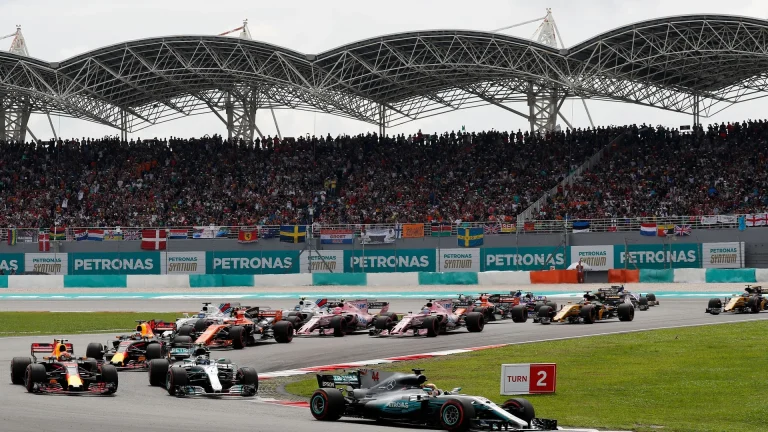
Baku rewards a driver who controls the first braking zone because the long straights can otherwise trap a fast car behind a rival with strong deployment. Russell began from the best place and converted it into track position. That did not make the afternoon simple, but it allowed Mercedes to plan around its own pace rather than a recovery through the midfield.
The opening laps still required restraint. Cold tyres and a narrow castle section punish an aggressive correction, while an early lock-up can decide the race before strategy develops. Russell kept the car within a predictable window and built the information needed for the later stints instead of trying to create a decisive gap immediately.
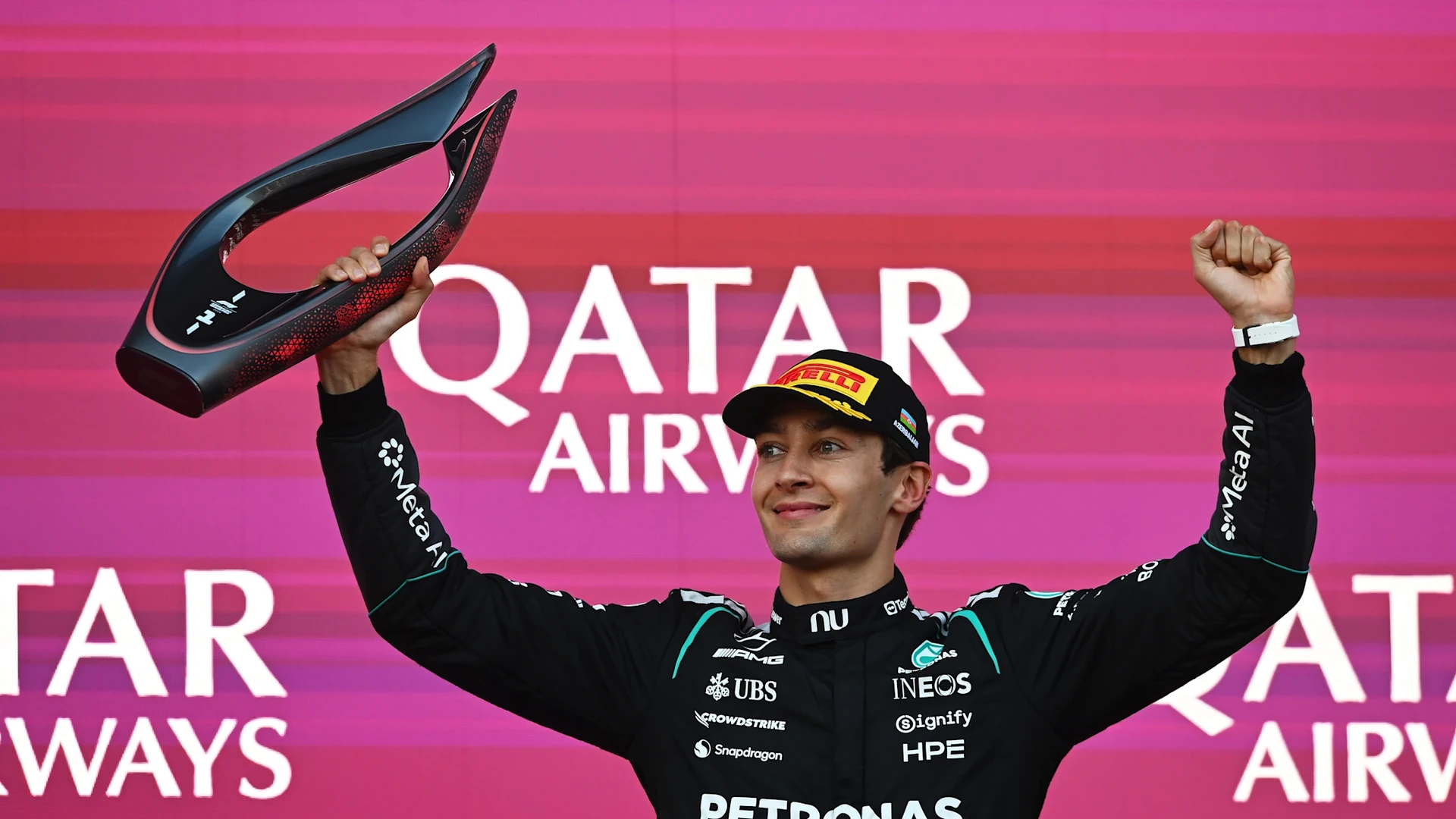
Verstappen remained close throughout the final laps
The winning gap was only a fraction of a second, so Russell could not use the final laps as routine tyre management. Verstappen remained close enough to threaten through the slipstream and braking zones. Russell needed clean exits before the longest acceleration areas because defending only at the end of the straight would have placed too much load on one braking event.
A close pursuer also changes how traffic is handled. Losing one second behind a lapped car can erase several careful laps, but forcing the pass in a narrow section carries a larger risk. Russell balanced those costs and reached the flag without offering the following car a clear launch into the final sequence.
A late turbo warning forced Russell to adjust his driving
Mercedes reported a turbo-related issue late in the race. The driver then had to follow instructions while maintaining the lap time needed to defend. That can involve different gear use, reduced stress in selected zones or changes to electrical deployment. Each adjustment costs attention at the moment when every braking point already matters.
Russell’s description of feeling like himself again fits this part of the performance. Confidence in Formula 1 is not merely pushing harder. It is the ability to receive a technical message, alter the controls and still place the car accurately. The narrow finish suggests that the solution protected the machinery without surrendering the pace required.
| Measure | Baku result |
|---|---|
| Winner | George Russell |
| Starting position | Pole |
| Season victories | 3 |
| Championship deficit | Reduced from 81 to 66 points |
Russell reduced the deficit but Antonelli remains ahead
Reducing an 81-point deficit to 66 keeps Russell’s campaign alive, but Antonelli remains ahead. One weekend cannot repair the entire difference. The useful shift is that Russell has added a win while showing that Mercedes can control a race on a circuit with long full-throttle sections and heavy braking.
The team now has to compare where the performance came from. If it depended on Baku’s surface, temperature and track layout, the next event may produce a different order. If the car kept its tyres and deployment in a wider operating window, the victory offers a stronger basis for the remaining rounds.
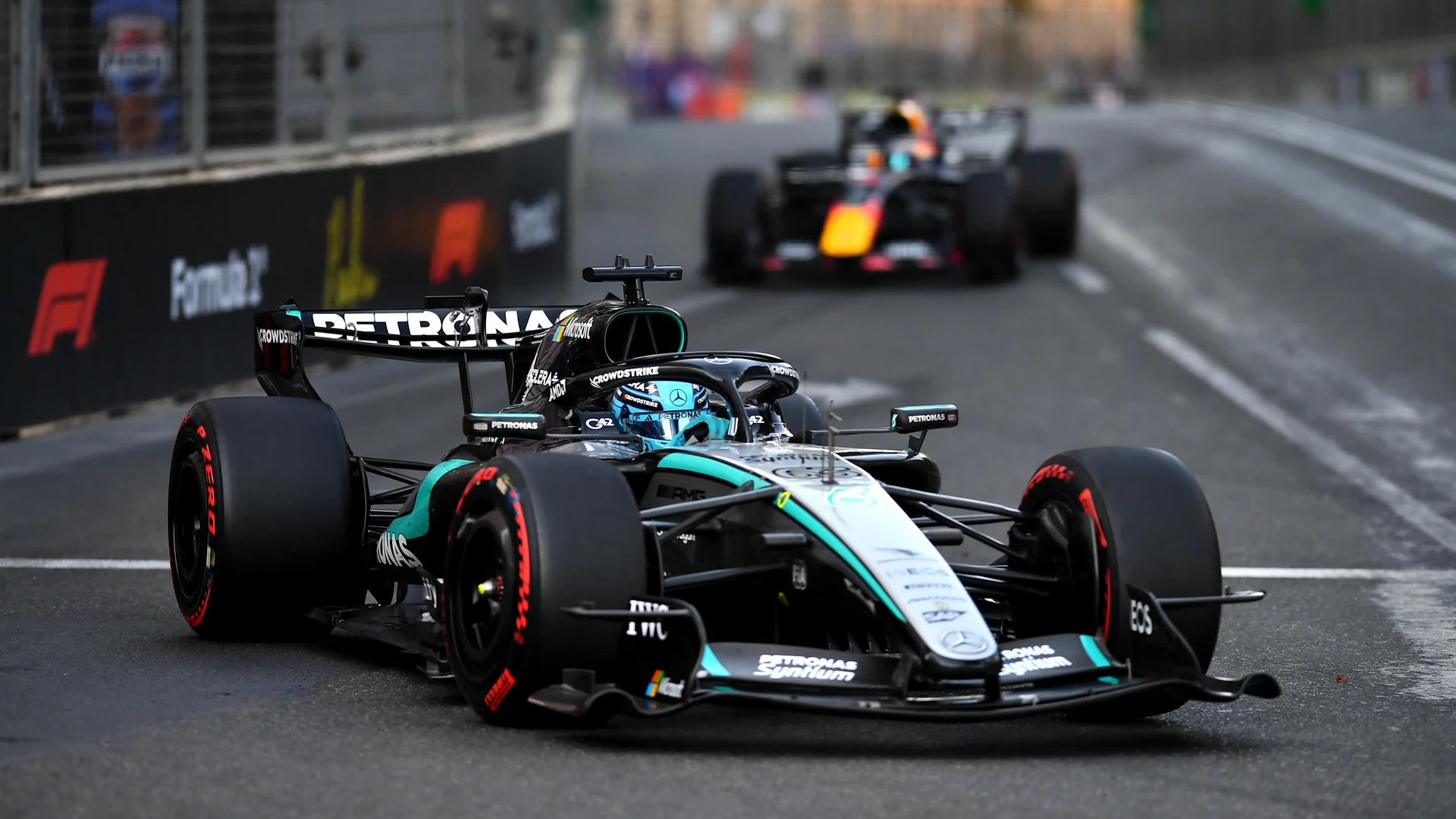
Mercedes now have a complete winning weekend to analyse
Russell combined qualifying, the start, tyre management and late technical adaptation. None of those parts alone explains the result. Pole created the opportunity, but a weak launch or a poor restart would have returned the advantage to Verstappen. The win therefore gives Mercedes a complete reference rather than only a promising setup direction.
The next task is to repeat the process on a circuit that asks different questions. Mercedes should preserve the preparation that produced confidence while avoiding the assumption that the same wing level and balance will travel unchanged. Baku proved Russell can use the car’s current strengths; the title fight requires the team to find those strengths again before the points run out.
Mercedes must repeat the preparation and race execution from Baku
The result was built across the full weekend, so the team should record more than the final setup. Preparation timing, tyre decisions, communication during the turbo concern and Russell’s approach to traffic all contributed. Those processes can transfer to another circuit even when the aerodynamic configuration cannot. A title challenge needs repeated error-free weekends as much as outright car speed.
Russell also needs a realistic view of the reduced deficit. Sixty-six points remain a large gap, and chasing it cannot justify a low-percentage move in every race. The better approach is to keep scoring at the level shown in Baku and force the championship leader to respond. Pressure becomes useful when it is created by consistency, not when it changes every braking decision.
No Comments