
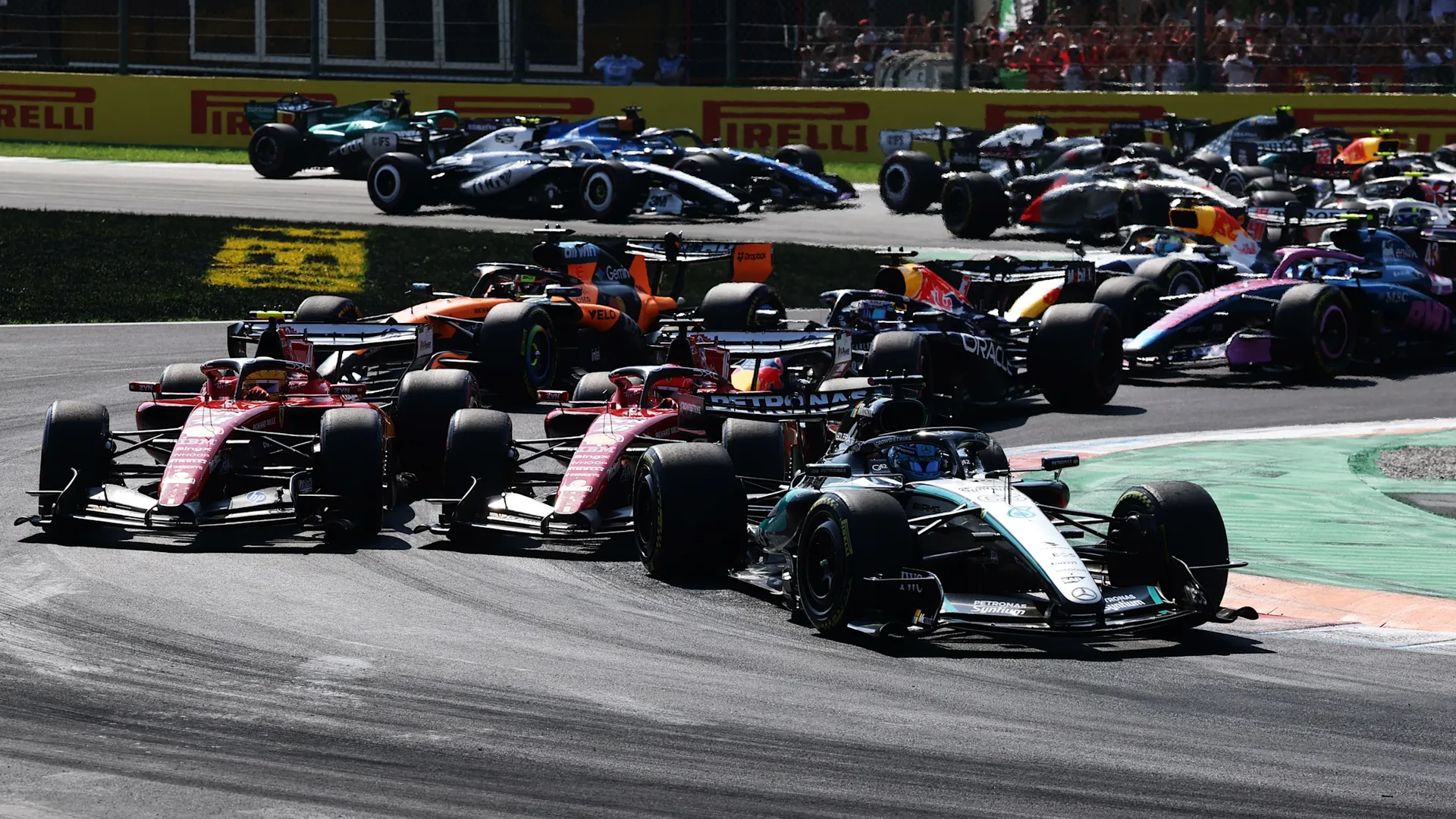
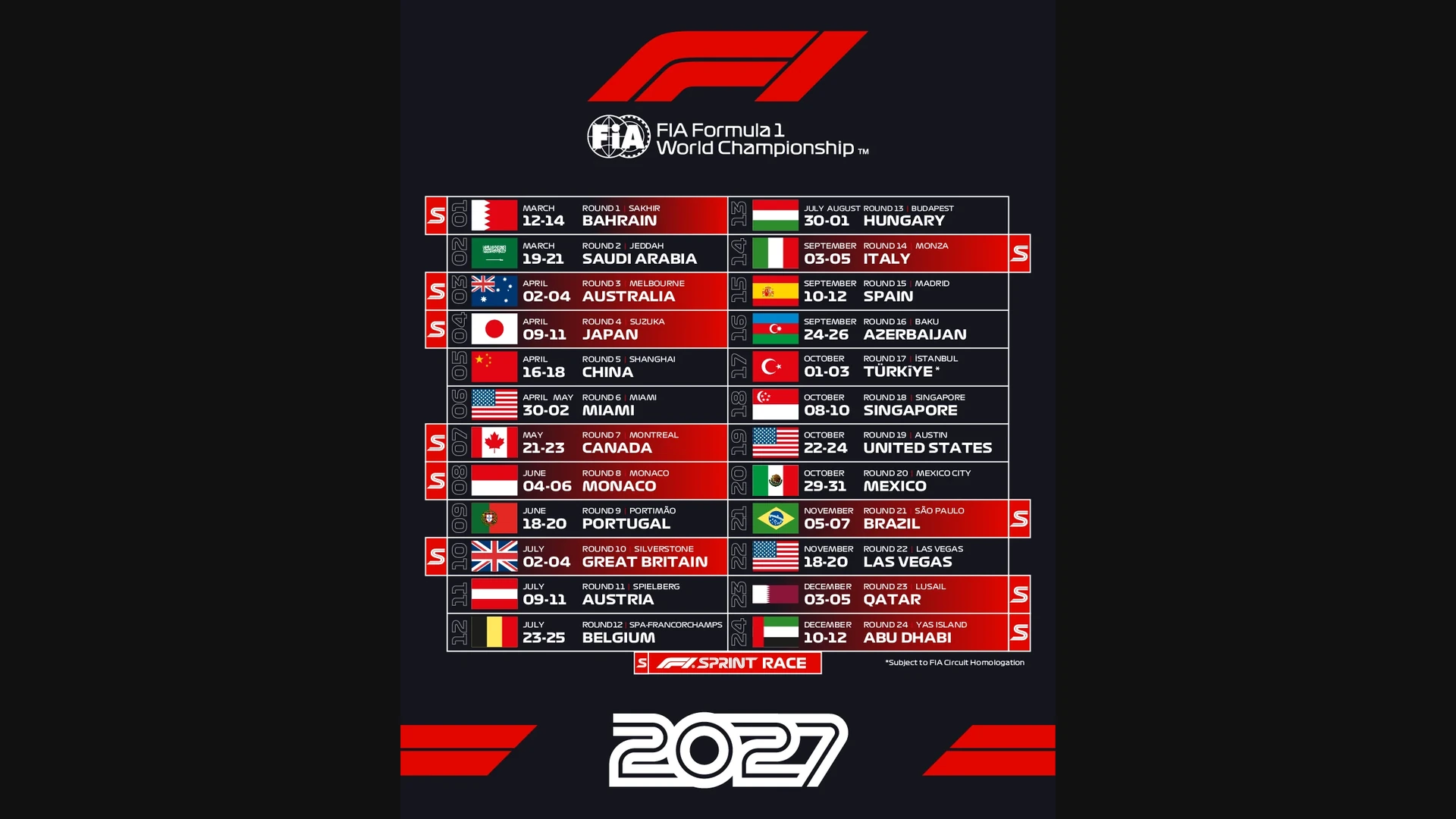
Formula 1 has published a 24-round calendar for 2027 covering twenty-two countries and including ten Sprint weekends. Portugal returns in June and Türkiye returns in October, while Bahrain opens the championship after hosting pre-season testing. The schedule expands the Sprint format to circuits that have never used it and keeps several familiar Sprint venues. More competitive sessions may appeal to spectators, but teams will have less practice time to understand new parts and track conditions.
Bahrain hosts both pre-season testing and the opening race
Beginning the season in Bahrain after pre-season testing reduces one type of logistical movement and lets teams compare race-weekend behaviour with recent running at the same circuit. The conditions will not be identical, and every team will have changed settings or parts, but engineers start with a larger bank of current information than they would at an unrelated venue.
That familiarity increases scrutiny. A weakness seen in testing can no longer be dismissed as something that will disappear on a different track. Teams must decide whether to repair it immediately or accept a compromise for the opener. The first qualifying session will reveal which testing programmes produced real understanding rather than one fast lap.
Ten Sprint weekends leave less time to test car changes
A Sprint weekend has only one normal practice session before competitive running begins. With ten such events, teams have fewer opportunities to test an uncertain setup. A new floor or suspension part must work close to expectation because there is little time to collect data or reverse a poor decision before setup changes become restricted.
Drivers also need to understand grip and balance quickly. Wind or a changed track surface can make simulator preparation incomplete. Teams gain an advantage when drivers and engineers communicate clearly from the first laps. More Sprint weekends therefore increase the value of precise preparation as well as car performance.
| Calendar feature | 2027 detail |
|---|---|
| Grands Prix | Twenty-four rounds |
| Countries | Twenty-two |
| Sprint weekends | Ten |
| Returning races | Portugal in June and Türkiye in October |
Five circuits will host a Sprint for the first time
Bahrain, Australia, Japan, Monaco and Abu Dhabi are listed for their first Sprint appearances. These circuits present very different questions. Melbourne and Suzuka provide fast sequences, Bahrain combines braking and traction, Abu Dhabi changes character across the lap, and Monaco offers almost no normal room for passing.
A Sprint at Monaco will attract particular attention because track position is so valuable. The short race may place even greater weight on qualifying and strategic timing than on repeated overtaking. That does not make the format meaningless, but it changes what success looks like. A precise start and error-free defence can be the central contest on a circuit where an ambitious move carries a high price.
Portugal and Türkiye return with different technical demands
Portugal returns in June, bringing elevation change and corners where wind can alter the car between laps. Türkiye returns in October with long loaded sections and a surface history that can produce very different grip depending on preparation and weather. Their inclusion increases the range of circuit demands inside the same technical regulations.
Returning venues also place pressure on recent data. Teams may have historical information, but cars, tyres and track surfaces evolve. Engineers must decide which old patterns remain useful and which belong to another era. A recognizable corner name does not guarantee that the current car will need the same setup solution.
Travel and staff recovery remain important
Twenty-four Grands Prix create a long operational season for mechanics, engineers, media staff and freight teams. Calendar design is not only a list of fan destinations. Consecutive events need workable transport, while people need enough recovery to maintain concentration around heavy machinery and complex procedures.
The 2027 schedule promises more racing action and a broader Sprint programme, but its success will depend on execution. Teams must protect development time, drivers must adapt with limited practice and organizers must make the expanded format clear to spectators. The calendar is ambitious; the season will show whether that ambition produces sustained competition rather than simple volume.
Fans will need a simple weekend rhythm
Expanding to ten Sprints makes clear scheduling more important. Start times, qualifying names and rules that restrict setup changes should be communicated consistently across broadcasts and ticket information. A format cannot gain value if occasional viewers are unsure which session sets which starting grid. The sporting challenge may be complex, but the weekend schedule should remain easy to follow.
Promoters also need to protect the Grand Prix as the central event. A Sprint can create an additional contest without making Sunday feel like a repetition. Distinct strategy, appropriate points and concise presentation help each session carry its own purpose. The 2027 calendar offers many chances to improve that balance rather than assuming more competitive laps automatically create more understanding.

No Comments