
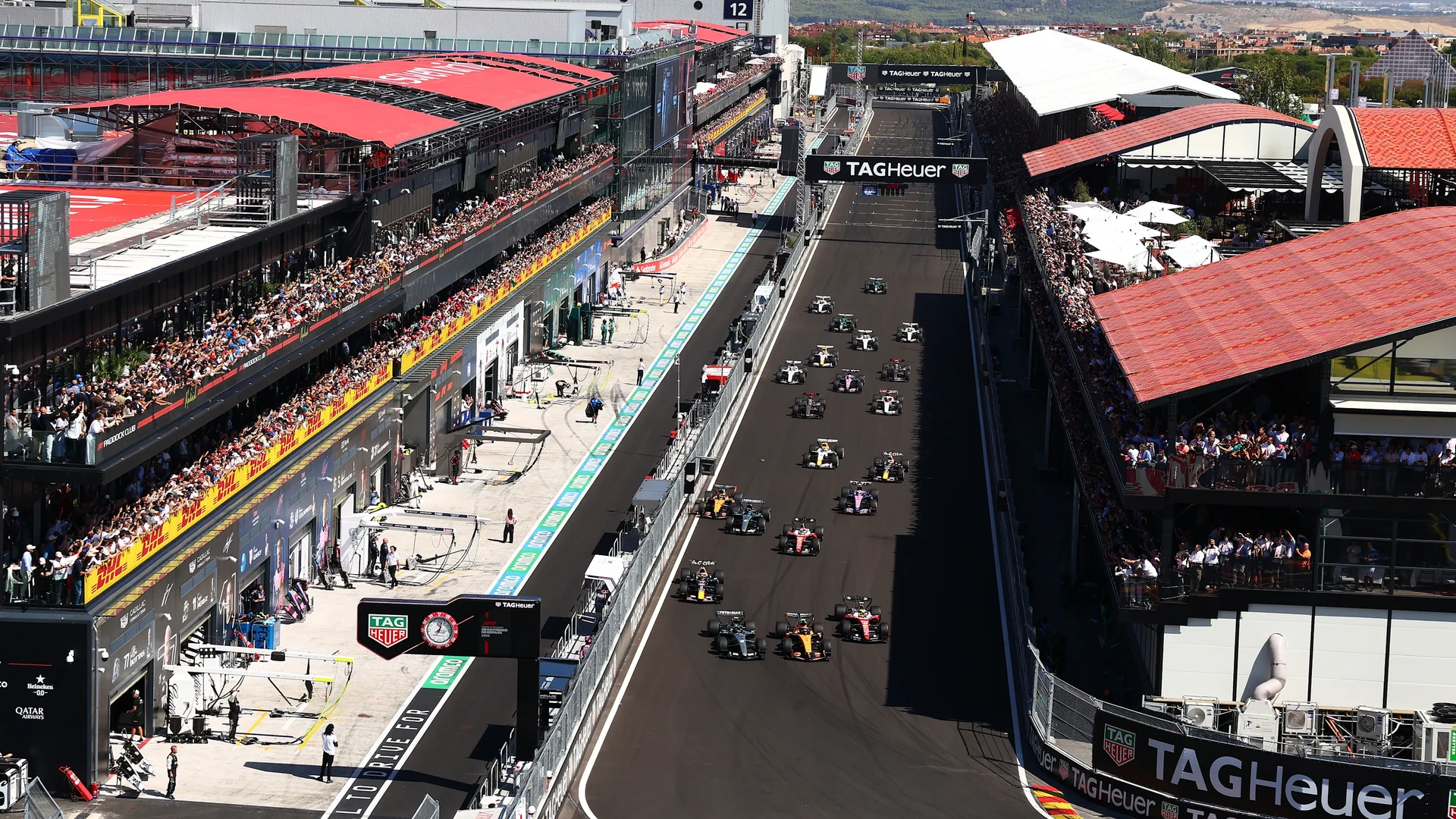
Formula 1’s first Spanish Grand Prix at the Madring showed how much uncertainty a new circuit creates. Teams arrived with simulator data, but the actual track surface, changing grip and narrow high-speed sections demanded new answers. Lando Norris produced the fastest qualifying lap and led the early part of the race. However, the moment when the Virtual Safety Car appeared changed the order. Kimi Antonelli used the opportunity, controlled the final part of the race and extended his championship lead.
Drivers had to replace simulation with real reference points
At a new circuit, drivers cannot rely on the knowledge they have built during earlier races. They may study the intended braking points and the fastest route through each corner before Friday, but they do not know how the asphalt will change after many laps. Kerbs can feel more severe than expected, walls can appear closer from the cockpit and wind can affect a fast corner differently from the simulator model. At Madring, lap times improved rapidly as drivers tested those limits.
The learning process included several mistakes. Arvid Lindblad, Lewis Hamilton and Ollie Bearman all had incidents during practice. Their problems showed the danger of searching for speed on a track that combines fast direction changes with little space for error. By qualifying, the drivers had a clearer picture, but some were still more confident than others. Norris trusted the car enough to take pole, while several rivals were still balancing maximum speed against the risk of damage.
Tyre control shaped both pace and strategy
The new surface made tyre behaviour one of the weekend’s central questions. A driver who controlled tyre wear could stay on the track for longer and preserve more strategic options. Overheated tyres lost grip and became less effective in the long corners that placed a heavy load on them. George Russell said the faster track conditions made it harder for him to use the tyres effectively, while Nico Hulkenberg managed them carefully and scored points for Audi.
Norris appeared to have the strongest combination of speed and tyre life during the opening phase. He created a sufficient advantage and gave McLaren control of the normal strategy. The race changed when the Virtual Safety Car appeared just after he had passed the entrance to the pit lane. Antonelli and Max Verstappen could stop while every car was moving at reduced speed. Norris had to wait, and his later pit stop cost more time. This disadvantage came from the timing of the neutralisation, not from a misunderstanding of the tyres.
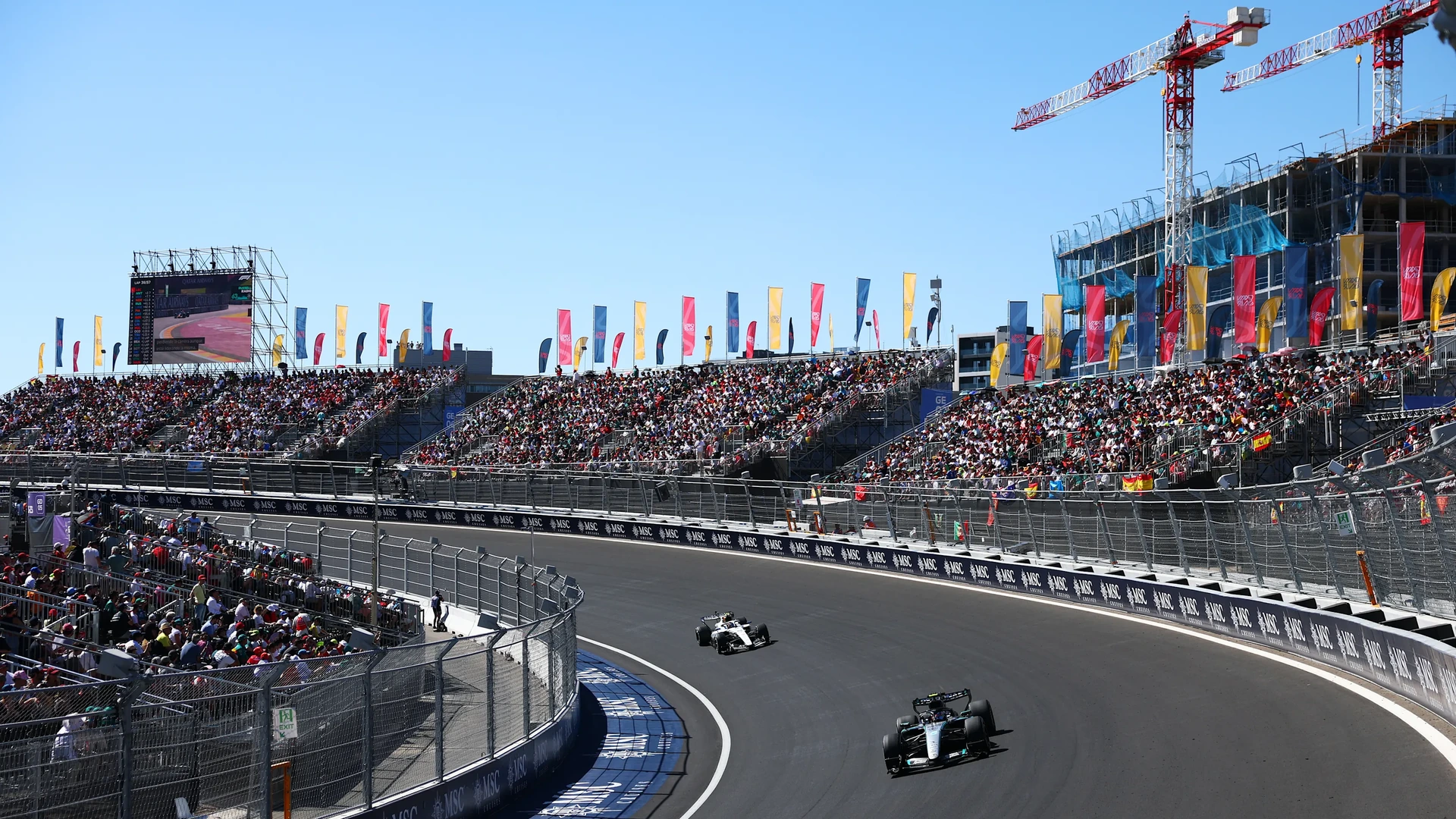
La Monumental gave the circuit a clear identity
The banked La Monumental section became the visual centre of the new track. Its long curve allowed different routes, placed a constant load on the tyres and brought a large group of spectators close to the cars. The corner also led towards a crest that drivers could not see over, so they needed to maintain speed and remain alert. Traffic could quickly become dangerous because a driver preparing a fast lap wanted space while another car could already be approaching at high speed.
La Monumental is important because it improves the racing rather than serving only as decoration. Drivers had to balance speed, tyre temperature and the position of the car at the exit. Spectators could also see cars using different routes through the same section. Future races will show whether teams identify one ideal method or continue to use several effective routes as the surface becomes older.
Antonelli used a fortunate opportunity and completed the job
Antonelli benefited from the Virtual Safety Car, but he still needed to drive accurately. He had qualified on the front row, stayed close enough to use the strategic opportunity and then managed the restart and final laps under pressure. He later acknowledged that Norris had deserved the win based on his driving. That statement did not change the result, but it showed that Antonelli understood how the race had changed.
The victory was Antonelli’s eighth of the season and moved his championship lead over Russell to eighty-one points. A margin of that size gives him some protection, but he cannot relax. Norris has shown stronger form, Ferrari remains capable of fighting near the front and one race without points can quickly reduce a large advantage. Madrid therefore strengthened Antonelli’s position while also showing that the fastest driver during a weekend does not always receive the largest reward.
Data from the first race can improve future events
Madring’s debut created several clear challenges: rapid learning, difficult tyre decisions, a major banked section and a race changed by the timing of the Virtual Safety Car. Organisers and teams now have real data for the next visit. They can study cars moving slowly near faster traffic, overtaking, changes in the track surface and the places where drivers repeatedly lost control or left the circuit.
The track does not need to produce the same type of race next year. Better knowledge may reduce some differences between teams and encourage more aggressive strategies. What matters is that the first race gave the venue its own sporting character. Drivers could not rely on memory, tyre management had a visible effect and one well-timed stop changed the contest. Antonelli still had to drive accurately after making that stop.

No Comments