
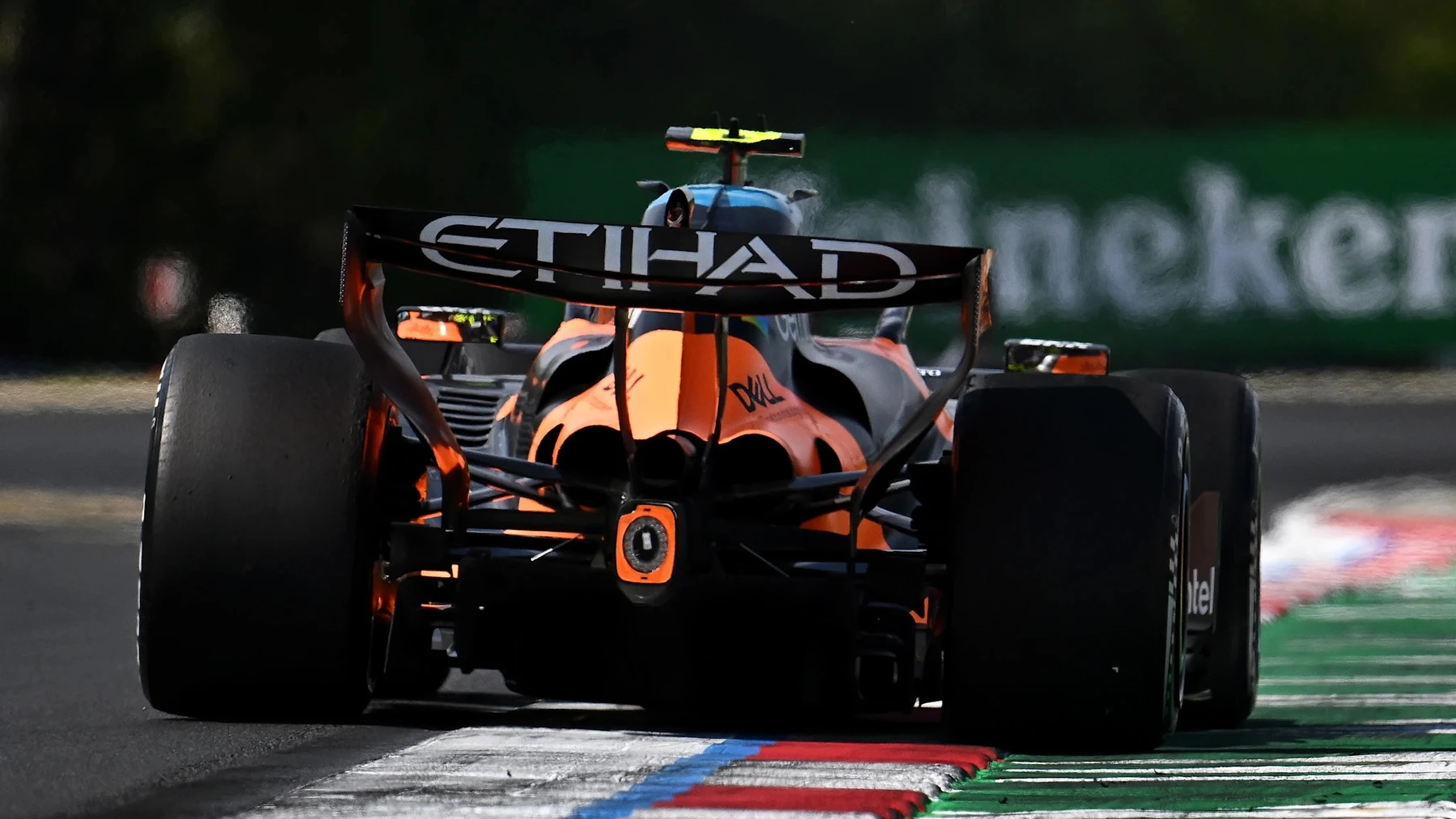
McLaren will evaluate a rotating rear wing known as the H-Wing during the Italian Grand Prix weekend. The team first tested its design in practice in Hungary and has now prepared a low-drag specification for Monza. The name refers to the H in the Etihad branding placed on the rear wing.
The name follows an old McLaren habit rather than a new rule
McLaren says the H-Wing name pays tribute to the F-duct used in 2010. That system took its familiar label from branding near an inlet, and the new wing follows the same playful convention. The letter does not describe a technical regulation or a separate aerodynamic category. It comes from the H in the Etihad branding carried by the rear wing and serves as the team’s informal label for the part.
Monza rewards low drag but still demands braking stability
Long straights make resistance through the air especially costly, so teams use smaller wing levels than at many other circuits. The car must also remain predictable into heavy braking zones and ride the chicanes without losing control. A wing that improves speed on the straight is useful only if the driver can trust the rear of the car while slowing down and changing direction.
| Technical point | Confirmed detail |
|---|---|
| Part | Rotating low-drag rear wing |
| Name | H-Wing |
| First trial | Hungarian Grand Prix practice |
| Next evaluation | Italian Grand Prix at Monza |
Rotation must operate inside the current technical limits
The wing attracts attention because part of its behaviour changes under aerodynamic load. That does not mean the device can move freely whenever the team wants. Formula 1 bodywork must pass defined tests and remain within the regulations. McLaren’s practice programme will check whether the chosen specification delivers the expected balance under real speed, temperature and wind conditions.
Energy use can change the shape of an overtake
McLaren also expects energy deployment to matter around Monza. A driver may gain on one straight, harvest energy in another phase and then lose part of the advantage before the next braking zone. That can create repeated exchanges rather than one simple pass. Engineers need clean practice data to decide how the wing level, battery use and race position work together.
Practice will decide whether the part stays on the car
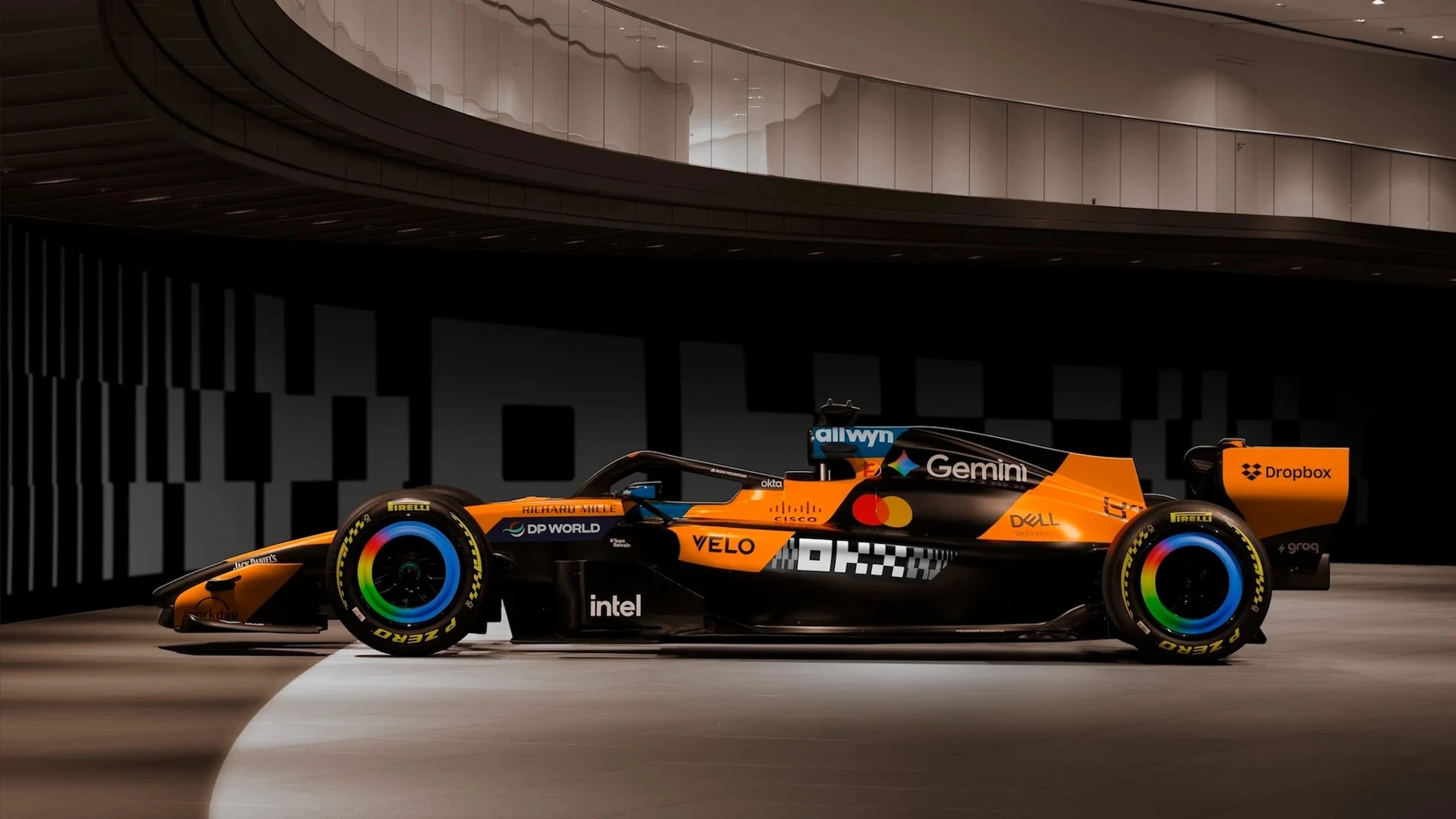
Bringing an update to the circuit does not guarantee that it will be used in qualifying and the race. McLaren can compare runs, examine rear stability and check tyre behaviour before choosing the final package. Minor aerodynamic pieces and previously declared Monza-specific parts are also available. The H-Wing therefore remains an evaluation item until the team confirms the specification for the competitive sessions.
Simulation provides a base, not a substitute for track time
Pre-event models help McLaren choose an initial set-up, but the margins near the front are small enough for a minor error to matter. Track temperature, wind direction and traffic can change the result of a comparison. Drivers need consistent laps, and engineers need runs that differ in one clear variable. Changing several settings together may produce a faster lap without revealing which adjustment helped.
Representative laps will reveal the first useful conclusion
A photograph of the wing cannot prove that it is faster, and one early sector cannot show its race effect. McLaren must examine straight-line speed, corner entry, tyre use and both drivers’ confidence across comparable runs. The team believes the package suits Monza, but the final choice remains part of the weekend. Clean practice data will show whether the lower drag compensates for any loss of rear stability.
Driver feedback must separate speed from confidence
A low-drag wing can improve the speed trap while making the rear of the car less settled in braking and direction changes. Norris and his teammate must explain whether a gain on the straight costs too much confidence at the chicanes. Engineers can compare telemetry, but the driver also reports corrections that do not appear in one headline number. The final package needs both an efficient lap and a car that can repeat it in traffic.

No Comments