
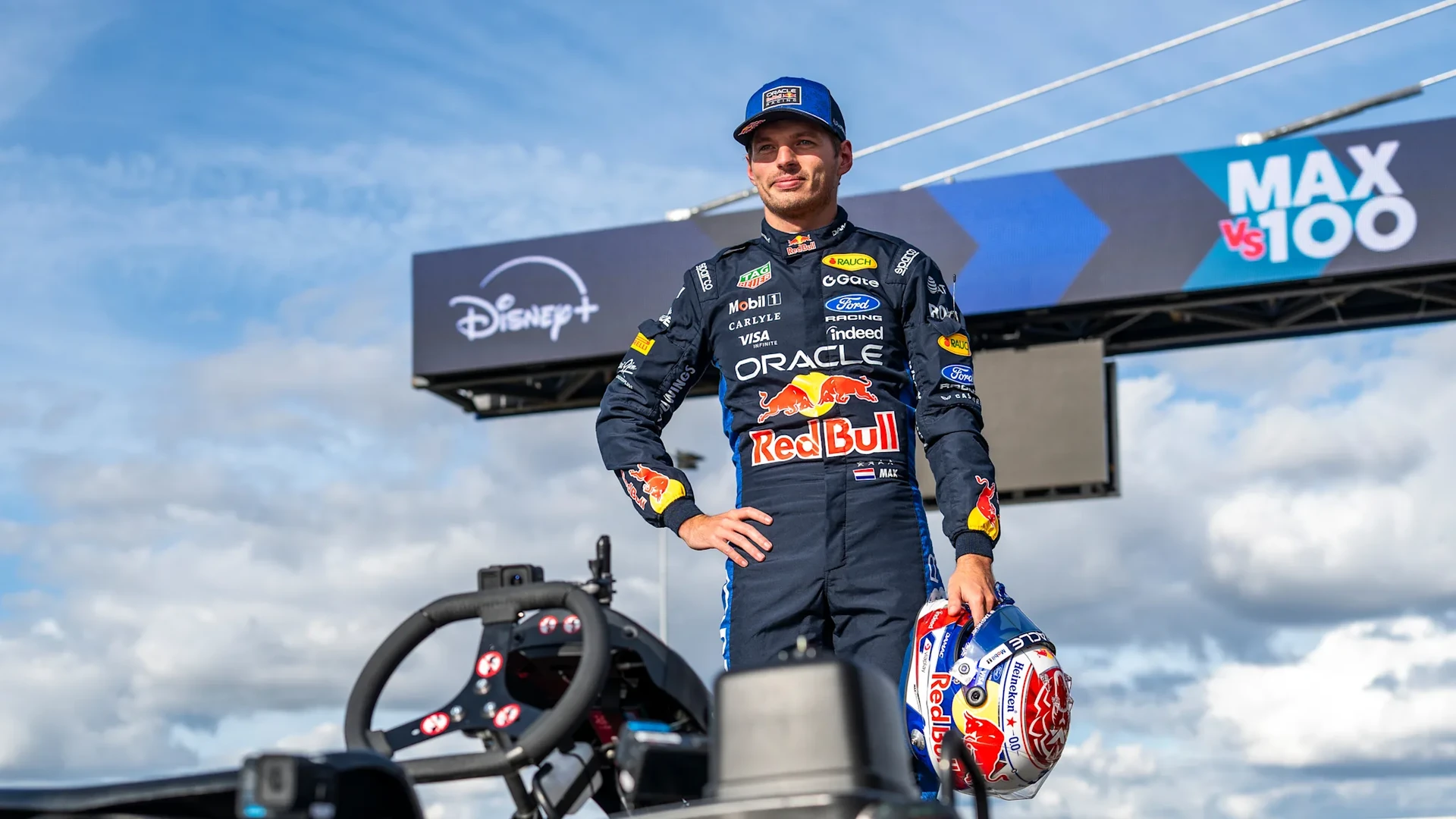
Max Verstappen began a karting challenge behind ninety-nine opponents and reached the front after fourteen laps and roughly thirty-five minutes. The race was designed around pursuit rather than a conventional equal-grid start, giving the Formula 1 champion a time limit to pass the entire field. He gained sixty-four positions on the opening lap, entered the top ten after six and then had to solve smaller, more organized groups as the track cleared. The result was entertaining, but it also showed why traffic management is a separate skill from outright speed.
Verstappen had to make quick decisions from the first lap
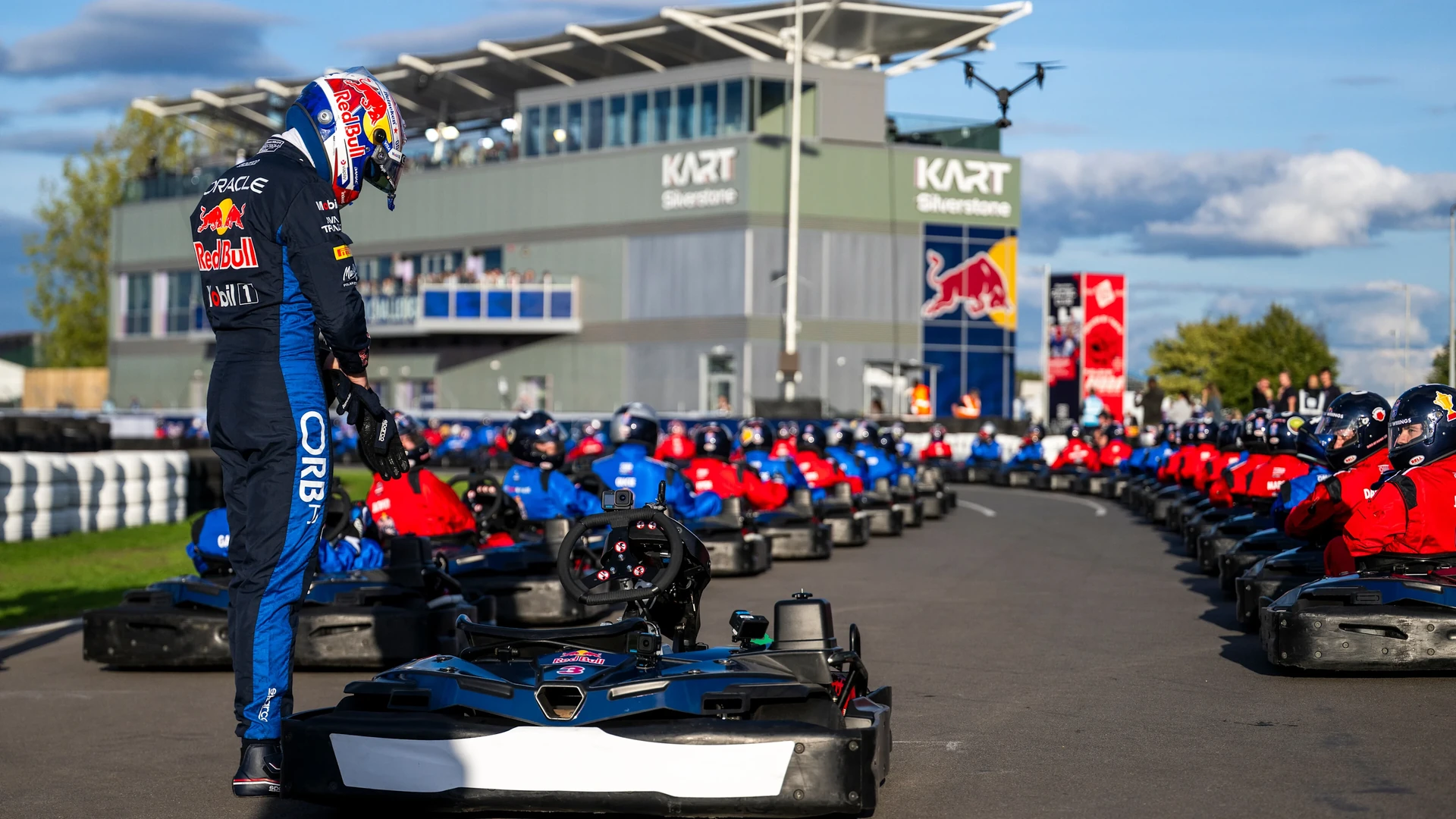
Starting last in a field of one hundred means the racing line is occupied almost everywhere. Verstappen could not wait for a perfect conventional overtaking point each time. He had to read which kart was already committed, identify gaps that would remain open and avoid contact that could end the attempt immediately.
Gaining sixty-four places in one lap sounds like pure aggression, yet avoiding contact was equally important. Large groups create sudden braking and several drivers may react to the same gap. Verstappen chose each move early and placed his kart where the other driver could see it. His speed created opportunities, but clear positioning made the passes possible.
With fewer karts ahead, every pass required more planning
By the fourth lap he was around twenty-fifth, and two laps later he had reached the top ten. At that point the density of traffic fell, but the remaining opponents were spread across more of the circuit and had clearer lines. Each pass required a larger closing distance and could no longer be hidden inside a crowd.
This is where lap consistency mattered. A small mistake did not only cost its own fraction of a second; it delayed the next catch. Verstappen needed to preserve momentum through corners while planning which section offered the safest pass. The pursuit became less spectacular visually but more demanding in its repeated precision.
| Stage | Verstappen’s position or task |
|---|---|
| Start | Behind ninety-nine karts |
| End of lap one | Sixty-four positions gained |
| After six laps | Inside the top ten |
| Lap fourteen | Reached the lead |
His lap time shows how quickly he caught the leaders
Verstappen’s best lap was 2:20.673, while another leading competitor recorded 2:23.327. A difference of a few seconds becomes significant after several laps, especially when the leader also loses time passing slower karts. Verstappen could therefore reduce the gap even when the leader was not yet visible.
Raw lap time was still not enough on its own. Passing off line changes braking points and can compromise the following corner. A driver who chases the theoretical fastest lap in traffic may lose more than one who accepts a slightly slower entry and completes the move cleanly. Verstappen combined the pace advantage with enough flexibility to keep each encounter short.
Verstappen reached first place well before the limit
The challenge allowed up to thirty laps or seventy-five minutes, but the lead changed after fourteen laps. Finishing so early shows that the decisive work occurred in two phases: the massive opening advance and a steady reduction of the remaining gaps. There was no need for a late desperate move against the clock.
Once at the front, the objective had already been achieved. That makes the event different from a normal race where tyre condition, defence and the finish still matter. Even so, reaching first required many of the same habits: spatial awareness, commitment under braking and an ability to reset immediately after every completed overtake.
Karting clearly shows basic driving skills
Formula 1 surrounds the driver with energy recovery, tyre strategy, radio information and highly developed aerodynamics. Karting removes many of those layers and makes line choice and close positioning easier to see. The machinery is simpler, but a field of one hundred creates complexity through people rather than technology.
The event should not be used to rank every participant against a world champion. It was designed as a pursuit with drivers of different experience. Its value is showing how quickly an elite driver reads traffic while maintaining speed. Verstappen passed the largest field of his career by treating every overtake as a separate decision.
Passing many skill levels required one shared standard
A mixed field contains drivers with different braking references and levels of experience. Verstappen could not assume every opponent would defend like a Formula 1 rival. He had to make his kart visible, leave a workable margin and abandon a gap if the other driver had already committed to it. Responsibility grows rather than shrinks when the faster competitor closes at a much higher speed.
That awareness made the challenge credible as well as quick. Contact would have damaged the event and possibly another participant’s kart. Completing so many passes cleanly showed control over closing speed, not only courage. The safest move was often also the fastest because it allowed Verstappen to accelerate immediately instead of recovering from a compromised exit.
No Comments