
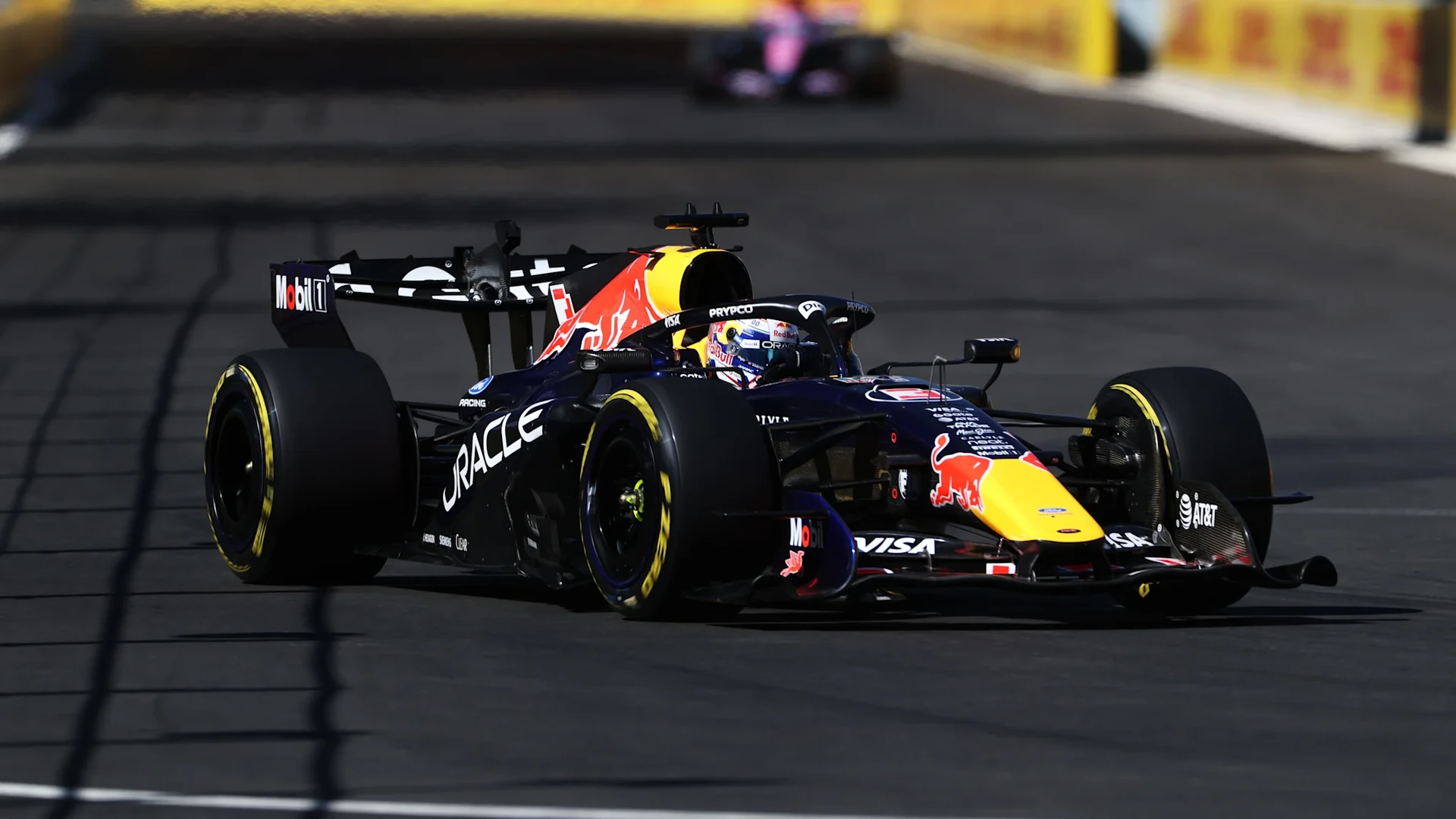
Red Bull has identified a persistent RB22 problem that is more complicated than ordinary tyre degradation. Team principal Laurent Mekies says aerodynamic performance can fall after a number of laps, reducing the consistency available to the driver during a stint. Updates introduced around Monza and Madrid have helped the investigation, but the team does not describe a single component as the complete answer. The issue connects setup, airflow and tyre behaviour, which is why a quick qualifying car can still become harder to manage in a longer run.
Aerodynamic performance drops before the tyres are worn out
A Formula 1 car naturally changes as fuel burns and tyres wear, but Red Bull has also found a separate loss of aerodynamic performance. Downforce does not disappear in one corner. The balance becomes less stable over several laps, forcing the driver to delay acceleration or avoid overloading tyres that no longer respond as they did at the start of the run.
This distinction matters for diagnosis. If engineers blame every slower lap on tyre wear, they may choose the wrong pressures, suspension settings or strategy. Comparing steering input, ride height, wind and aerodynamic load helps the team identify when the change begins. It can then decide whether to alter the setup, the floor or another component. Engineers must repeat that comparison with both cars because a driving adjustment can hide the same technical weakness in different ways. Data from one driver can identify a trend, while matching evidence from the other car makes the diagnosis more reliable.
Lap times reveal the problem but not its cause
A driver may report that the rear is sliding or the front no longer turns, but the sensation can be the final result of several interactions. A small change in ride height alters airflow, which changes load, which then changes tyre temperature. By the time a lap time falls, the original trigger may be separated from the visible symptom.
Red Bull therefore needs repeated runs rather than one spectacular lap. Comparable fuel loads and tyre compounds help distinguish a genuine improvement from a favorable track condition. Practice sessions are especially valuable when the team resists the temptation to change several variables at once. A slower but controlled test can produce a better race car than a rapid experiment whose cause remains unclear.
| Evidence | Question for Red Bull |
|---|---|
| Lap times | When does the decline begin? |
| Driver feedback | Do the front or rear tyres lose performance first? |
| Track data | Do real conditions match the simulation? |
| Tyre temperatures | Do they cause the problem or result from it? |
Recent updates help Red Bull identify the cause
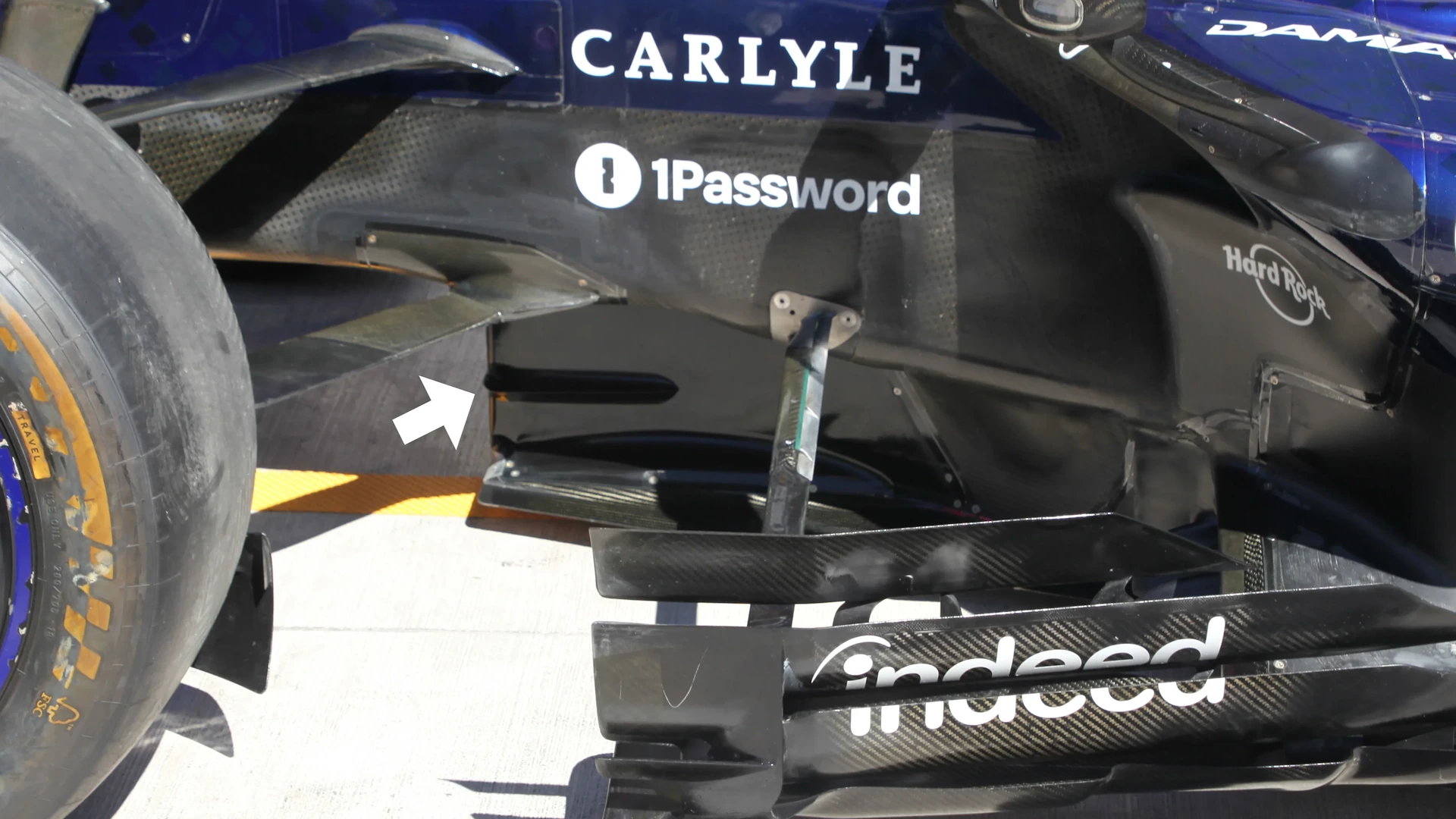
Parts brought to recent rounds have offered Red Bull new data. An update can improve performance directly, but it can also confirm how closely simulation matches the circuit. If the measured pressure or load differs from prediction, the team learns where its model needs correction. That knowledge affects later designs as much as the current weekend.
Mekies has avoided claiming that one group of upgrades has solved the problem. That caution is useful. A floor or bodywork change may help in one condition while another weakness appears in traffic or crosswind. A real improvement must work at several circuits, not only during one session with unusually favorable conditions.
Drivers can limit the problem but cannot solve it
A driver can change the corner entry, avoid a high kerb and control tyre temperature, but those adjustments make the car slower. Development should give the driver a car that remains predictable in normal race conditions. Confidence also matters: a small and gradual change is easier to manage than a larger balance shift that arrives without warning.
Setup creates another compromise. More stability may reduce qualifying speed, while a setup focused on one fast lap can make the later decline worse. Engineers and drivers must decide what the circuit requires. A track where passing is difficult may reward qualifying performance, while a race with long runs will punish a car that works for only one lap.
The solution must work at different circuits
The next evidence will come from tracks with different speeds, surfaces and corner shapes. If the same trend appears at a consistent stage despite those changes, Red Bull can narrow the search. If it disappears, the team needs to understand which operating condition protected the car rather than assuming the problem has vanished permanently.
RB22 development is therefore a process of removing uncertainty. Red Bull already knows the result: aerodynamic performance declines and the driver becomes less consistent. The harder work is finding the sequence that causes the decline and creating a car that remains stable throughout a long run. Until that happens, one-lap speed will show only part of the team’s true performance.

No Comments