
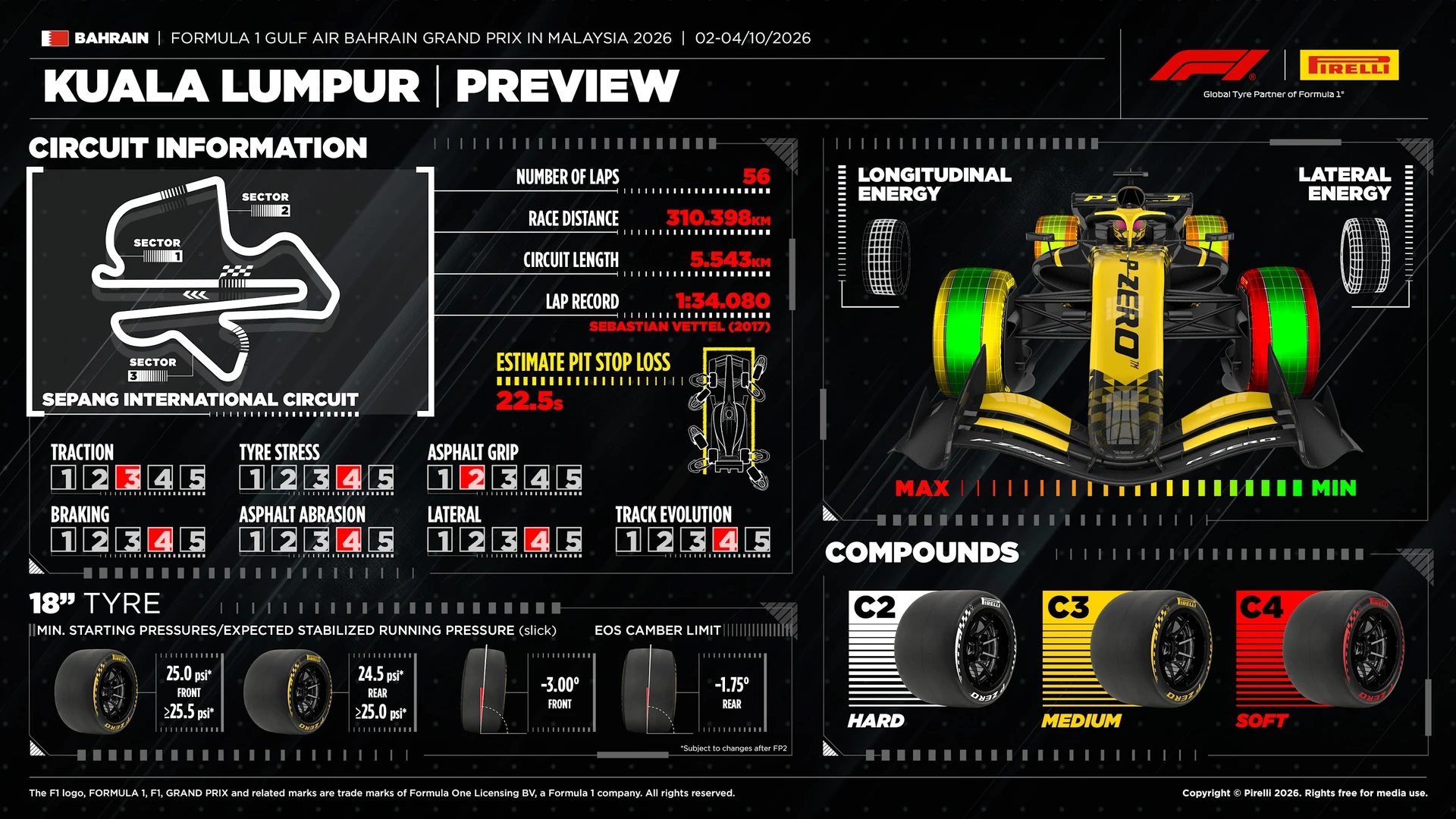
Formula 1 returns to Sepang this weekend with Pirelli’s C2 hard, C3 medium and C4 soft tyres. The selection is one step softer than the most conservative available trio. It may allow both one-stop and two-stop strategies to work. The current cars have never raced at Sepang, so teams must use Friday practice to measure tyre wear as well as search for speed.
All three dry tyre compounds can be useful
The C2 is designed for a long first or final stint. The C3 gives teams the most flexibility, while the C4 offers extra grip for qualifying or a shorter race stint. If the soft tyre loses performance too quickly in the heat, teams may keep it mainly for qualifying. If its pace remains stable, it can also help a driver attack at the start and gain track position.
Pirelli gives each driver two hard sets, three medium sets and eight soft sets for the weekend. Drivers who reach Q3 receive one extra soft set. This allocation makes Friday planning important. A team that uses too many medium tyres while adjusting the car may reduce its race options. Saving every set is also risky because the engineers still need reliable wear data from several consecutive laps.
Sepang puts different pressure on the front and rear tyres
Long corners make the front tyres work hard to hold the racing line, while acceleration zones place more stress on the rear tyres. A car may look balanced for one fast attempt but lose pace during a longer run. Drivers must explain whether the main problem changes as fuel burns away. A stable car at the start can later develop front locking or rear overheating.
Pirelli says the surface remains about as rough as Bahrain even after resurfacing and levelling work. Surface temperature and the energy placed into each tyre will therefore matter more than the number of completed laps alone. A tyre can still look healthy while moving outside its ideal temperature range and losing traction. Teams must compare the time on the stopwatch with the way the car produced it.
| Tyre | 2026 Sepang designation |
|---|---|
| C2 | Hard |
| C3 | Medium |
| C4 | Soft |
| Dry-race rule | At least two different slick compounds |
| Main variable | Thermal degradation on a changing surface |
Traffic may decide whether one or two pit stops is faster
A two-stop plan works only when the driver can use the speed of the fresh tyres. Returning to the track behind slower cars may remove that advantage before an overtake is possible. Engineers need an accurate picture of the gaps around the expected pit-stop window. An early stop can gain a position, but it can also trap the driver in traffic and waste the new set.
A one-stop race requires careful driving in the opening part of each stint. The driver must protect the most stressed tyre without losing contact with the car ahead. Smooth steering and clean acceleration are more useful than simply driving slowly everywhere. If wear remains controlled, the longer plan offers flexibility during a Safety Car period or late rain. If the driver loses too much ground, the saved tyre has no position left to defend.

Friday times will improve as more rubber reaches the circuit
Grip should rise through Friday because Formula 1 has not raced at Sepang since 2017. A time set early on a dusty surface cannot be compared directly with a later attempt at the same fuel level. Teams need repeated runs and accurate track-temperature records to separate a real setup improvement from the normal increase in grip.
Many drivers know Sepang only from simulators or other racing categories. Learning the circuit also affects the quality of the tyre data. A mistake in one corner can overheat the tyre and reduce grip in the next sector. The most useful long run is not always the one with the fastest opening time. Engineers need a driver to repeat the same inputs closely enough for a fair comparison.
Rain could force every team to change its plan
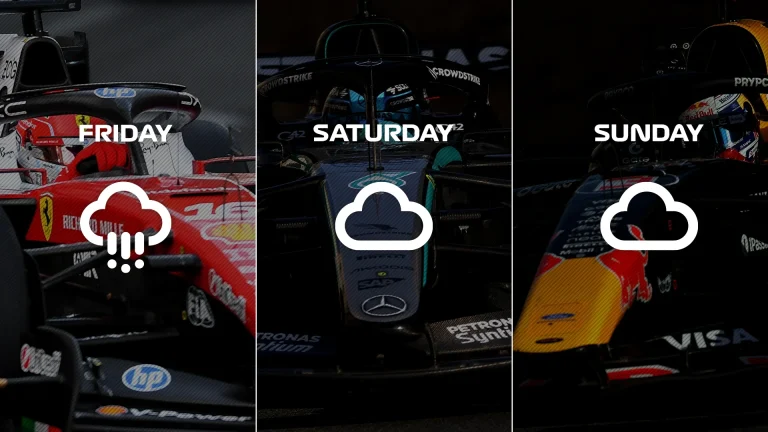
Intermediate and full wet tyres will be available if rain reaches the circuit. Wet conditions can reduce the importance of saved dry tyres, but the dry strategy matters again as soon as a clear racing line appears. Teams must judge whether the surface is improving quickly enough for an early switch or whether more rain makes it safer to remain on the grooved tyre.
This uncertainty makes the C2, C3 and C4 selection useful. The three compounds are different enough to create alternatives, but none should be ignored before practice. The winning plan may look simple after the race, yet it will depend on Friday wear data, traffic, surface temperature and the timing of any rain. At a returning circuit, the main advantage is the ability to change a plan when new information arrives.

No Comments