
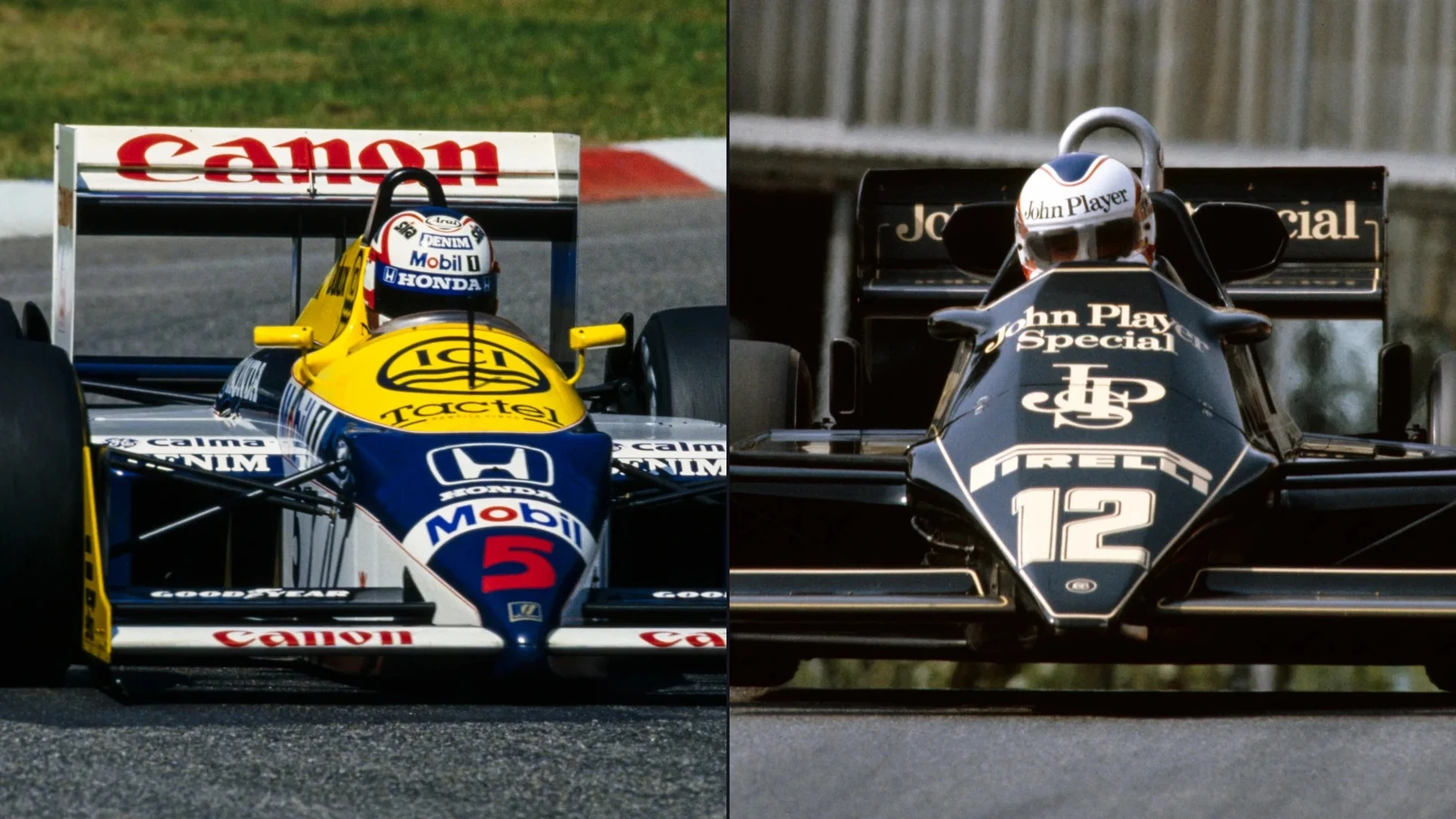
The 1992 world champion chose the Williams FW11B as his favourite and explained why the Lotus 81B and 92 damaged driver confidence.
The FW11B delivered power with danger
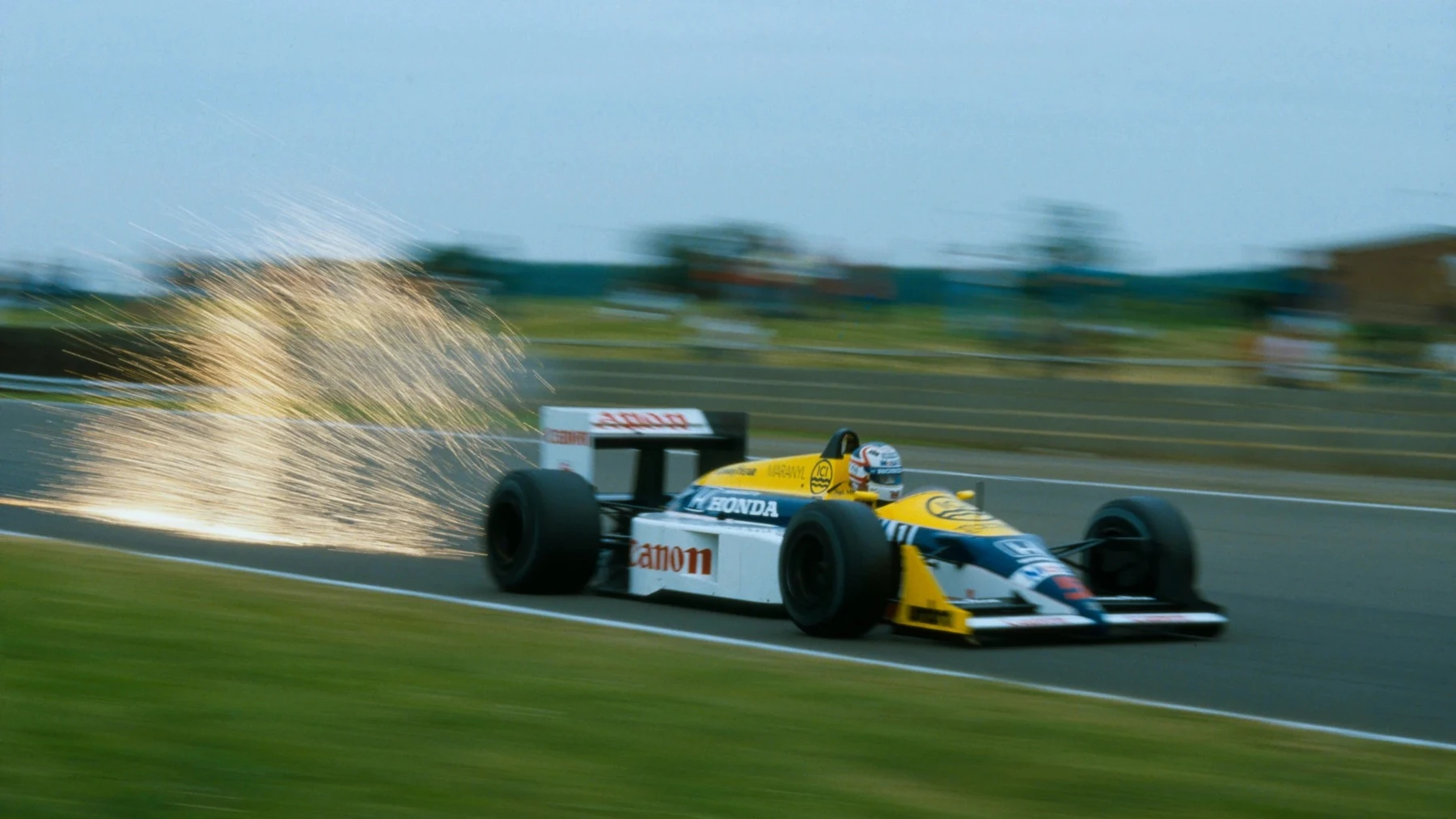
Mansell selected the Williams FW11B as the car he loved most. In qualifying form, he recalled output of about 1,500 horsepower. The figure describes an era when turbo engines produced enormous short-run performance and drivers had to manage a car that could overwhelm the available grip.
He also described the FW11B as a machine that appeared to want to throw the driver off the circuit. That fear was part of the attraction. A clean lap provided immediate proof that the driver had controlled something exceptionally demanding.
A smaller fuel tank changed the Williams package
The 1987 fuel limit fell from 220 litres to 195. Williams could use a smaller tank and lower body package while continuing with Honda’s RA167E turbo engine. Suspension changes supported the revised car, but the basic idea remained connected to the earlier FW11.
The engine worked around the regulated four-bar boost limit and produced remarkable qualifying power. That performance did not make the car easy. The driver still had to place the throttle carefully and prepare for a rapid increase in force.
| Car | Mansell’s view | Key trait |
|---|---|---|
| Williams FW11B | Loved | Extreme turbo power |
| Lotus 92 | Loathed | Unreliable active suspension |
| Lotus 81B | Loathed | Long wheelbase resisted turning |
The Lotus 92 created the wrong kind of surprise
Mansell disliked the Lotus 92, especially during the early work with active suspension. He remembered the system causing accidents even when the car was travelling in a straight line. A driver cannot build speed when the platform changes in a way that feels unpredictable.
The 92 was a temporary solution in 1983. Renault could not initially provide enough turbo engines, so Lotus needed another car around the Cosworth DFV. The active system was dropped after two races because of weight and reliability problems.
The long Lotus 81B refused to rotate
The other car on Mansell’s negative list was the Lotus 81B from 1980. It used a wheelbase seven inches longer than the normal version. The change aimed to help the ground-effect concept, but Mansell found that the car would not turn quickly enough.
A reluctant front end makes every corner difficult. The driver waits longer for rotation, uses more steering and can lose the line before applying power. The experiment was not only slower; it reduced confidence in the basic response of the car.
Love and fear can exist in the same racing car
Mansell’s choices show that difficulty alone does not make a car bad. The FW11B was dangerous and demanding, yet its response made sense when he drove it well. The Lotus cars were difficult because their behaviour prevented a consistent relationship between input and result.
That difference is central to driver confidence. A fierce car can be rewarding when its limits are readable. An unpredictable car remains unpleasant even at lower speed because the driver cannot trust the next reaction.
The memories explain more than a result table
Mansell later won the world championship with the Williams FW14B, but he still chose the FW11B as the car he loved. Personal connection does not always follow the most successful season. Sound, power and the challenge of one clean lap can leave a stronger memory.
His negative choices also come from early Lotus years rather than one simple race result. The account is coherent: one Williams gave extreme performance that could be understood, while two Lotus designs removed the trust needed to attack.
The choices come from Mansell’s own memories, with technical context supplied by Formula 1. They describe how the cars felt to him; they are not a ranking based only on wins, pole positions or championship points.

No Comments